
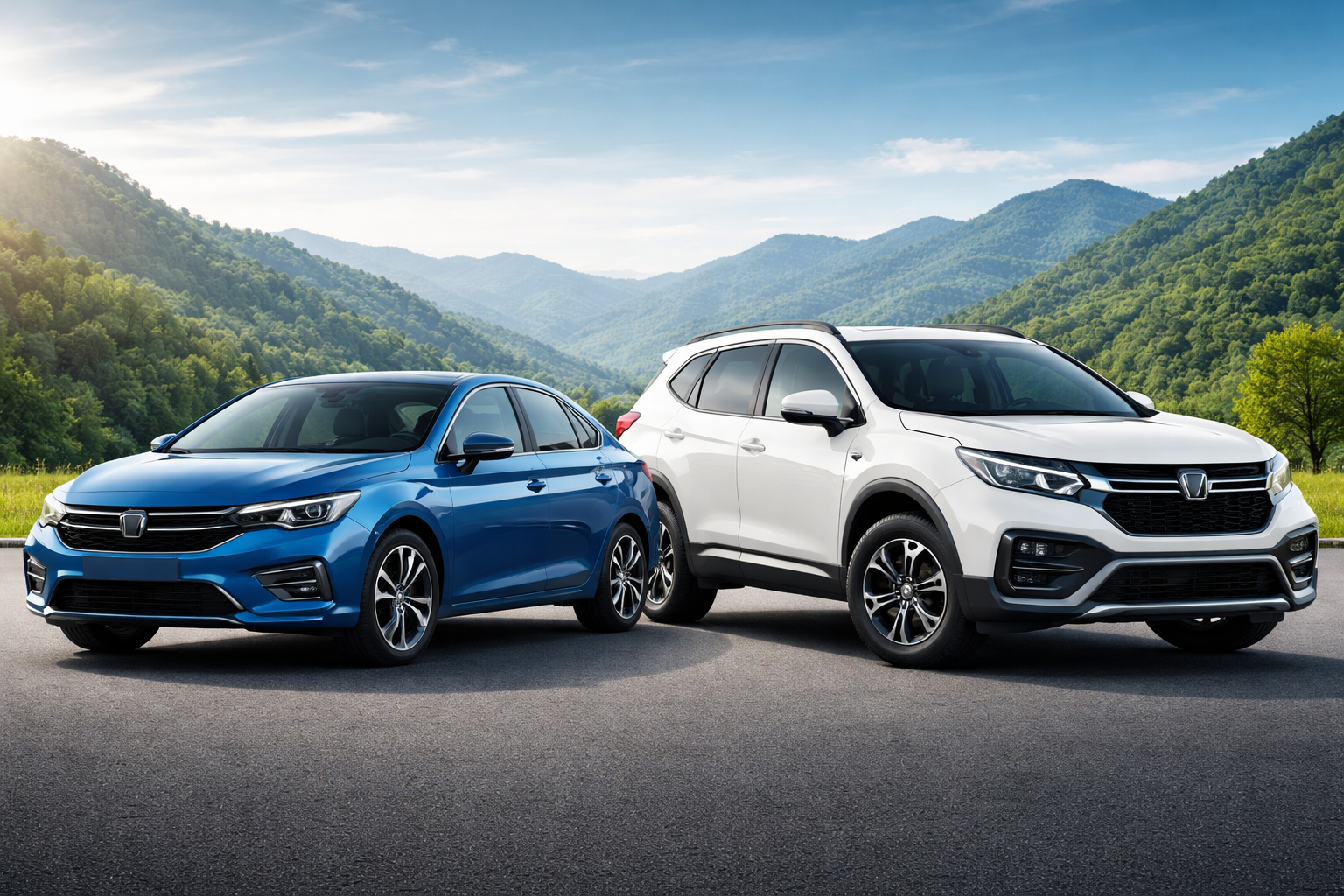
Sedan vs SUV is one of the most common dilemmas faced by car buyers today, especially in India where road conditions vary widely. If you are confused about whether to choose a sedan or an SUV, you are not alone. This SUV vs sedan comparison article is written in simple language to help beginners clearly understand the differences, benefits, risks, real-world use cases, and the latest 2026 market trends.
In the Indian market especially, both sedans and SUVs are extremely popular, but they serve very different purposes. SUVs dominate sales with models like Mahindra XUV 7XO and Kia Seltos leading, while sedans like Maruti Dzire remain favorites for efficiency. This guide will help you decide which body type suits your lifestyle, budget, family needs, and driving conditions—without technical jargon or marketing hype. It also integrates tips on timing your purchase and budget planning for smarter decisions.
Meaning / Explanation: What Is a Sedan and What Is an SUV?
To understand the sedan vs SUV debate, we must first understand what each vehicle type actually means. These definitions set the foundation for comparing their suitability on Indian roads.
What Is a Sedan?
A sedan is a passenger car with a low ground clearance (typically around 160–180 mm), four doors, and a separate boot (trunk). Sedans are designed mainly for comfort, smooth driving, and fuel efficiency. They usually seat four to five people comfortably and are best suited for city driving and highways. In 2026, popular sedans include Maruti Dzire, Hyundai Verna, Skoda Slavia, Honda City, Volkswagen Virtus, and Maruti Ciaz.
Sedans feature a three-box design: engine compartment, passenger cabin, and separate trunk, which contributes to better aerodynamics and stability. Their lower center of gravity makes them handle better at high speeds, ideal for highway cruising in India.
What Is an SUV?
An SUV (Sport Utility Vehicle) is a taller vehicle with higher ground clearance (often 190–250 mm or more) and a more upright driving position. SUVs are built to handle rough roads, bad weather, and long-distance travel more comfortably. Modern SUVs range from compact crossovers to full-size rugged vehicles. Popular 2026 examples include Hyundai Creta, Kia Seltos, Tata Harrier, Tata Punch, Mahindra XUV700, Mahindra XUV 7XO, and Toyota Fortuner.
SUVs often have monocoque or body-on-frame construction for versatility and can offer all-wheel drive or four-wheel drive in premium or off-road-focused models. In India, their high ground clearance helps tackle potholes, speed breakers, and rough rural roads more confidently than most sedans.
Key Differences: Detailed Sedan vs SUV Comparison Table
Here’s a side-by-side comparison based on key factors relevant to Indian buyers in 2026.
| Feature | Sedan | SUV |
|---|---|---|
| Ground clearance | Approx. 160–180 mm | Approx. 190–250 mm or higher |
| Fuel efficiency | Generally higher (often 18–25 kmpl petrol/diesel) | Moderate (around 14–20 kmpl) |
| Price range (entry) | Roughly ₹5.5–12 lakh for popular mass-market models | Roughly ₹5.5–15 lakh for compact and mid-size SUVs |
| Seating space | Comfortable 4–5 adults, lower roofline | 5–7 adults, more headroom and legroom in many models |
| Highway stability | Excellent due to lower center of gravity | Good; higher visibility but more body roll than sedans |
| City parking | Easier to park in tight spaces | More challenging due to height and length |
| Boot/cargo | Separate boot, usually 300–400 L | Large, flexible boot space, often 400–500 L or more |
| Driving position | Low, car-like seating | High, commanding view of the road |
| Ride comfort | Very comfortable on good roads | Comfortable across mixed and rough roads |
| Resale value (current trend) | Stable but varies by brand/model | Generally stronger demand and resale in 2026 |
This table highlights why sedans typically suit urban commuters and highway cruisers, while SUVs fit families and buyers who regularly face bad roads or need more space.
Why It Matters: Why Choosing Between Sedan vs SUV Is Important
Choosing between a sedan and an SUV is not just about looks or trendiness. It affects your daily driving experience, fuel costs, maintenance expenses, safety, comfort, parking convenience, and long-term satisfaction. In India, road conditions, traffic congestion, parking availability, and fuel prices make this decision even more critical.
A wrong choice can lead to:
- Higher running and fuel costs than you expected.
- Difficulty driving and parking in tight city streets or apartments.
- Discomfort on bad roads or during long journeys.
- Limited luggage or passenger space for your family needs.
- Regret after purchase and potential loss of money when selling.
That is why understanding the sedan vs SUV comparison deeply helps you make a smarter and more future-proof decision. If you are also trying to fix a budget and avoid overspending, check this detailed resource: How to Choose the Right Car for Your Budget.
According to global automobile standards, vehicle classification such as sedans and SUVs is based on body structure, ground clearance, and intended usage. Authoritative automotive resources like NHTSA vehicle safety guidelines and IIHS safety ratings help buyers understand how different vehicle types perform in real-world conditions.
Fuel efficiency and emissions also play a key role in the sedan vs SUV debate. Organizations such as the U.S. Environmental Protection Agency publish detailed data on vehicle mileage and environmental impact, which is useful when comparing sedans and SUVs.
How It Works / Example: Sedan vs SUV in Real-Life Scenarios
Scenario 1: City Office Commuter
If you drive daily in heavy traffic, park in tight spaces, and mostly travel alone or with one passenger, a sedan often works better. It is easier to maneuver, more fuel-efficient, and smoother in stop-and-go traffic. Compact sedans and mid-size sedans feel light to drive, require less effort to slot into narrow gaps, and usually offer better mileage, which directly reduces your monthly fuel bill.
Scenario 2: Family with Kids
For families with children, elderly parents, or frequent weekend trips with luggage, an SUV provides more space, better seating comfort, and easier entry and exit. The higher seating position makes it easier for seniors to get in and out, and folding rear seats give you flexibility for strollers, bags, and holiday luggage. If your family often travels with 4–5 people plus luggage, an SUV is usually more practical than a sedan.
Scenario 3: Rural or Bad Roads
If you frequently travel on broken roads, village roads, or highways with deep potholes and unmarked speed breakers, SUVs perform better due to higher ground clearance and stronger suspension setups. An SUV reduces the chances of scraping the underbody or bumper, and you can drive with more confidence even in light off-road conditions or during monsoon seasons.
Scenario 4: Long Highway Drives
Sedans excel in highway stability, cornering, and comfort at high speeds, thanks to better aerodynamics and a lower center of gravity. They feel more planted on smooth expressways and can be more enjoyable for enthusiastic drivers. SUVs, on the other hand, offer better visibility, a relaxed upright posture, and a sense of security, which can reduce driver fatigue on very long trips.
If you are completely new to car buying and feel overwhelmed, this beginner-focused guide can help you structure your overall decision: Car Buying Guide for Beginners.
Benefits: Advantages of Sedan vs SUV
Benefits of Sedans
- Better fuel efficiency, especially in petrol and diesel models, which is crucial with rising fuel prices in India.
- Lower purchase cost and generally lower insurance premiums compared to similarly equipped SUVs.
- Smoother, more car-like ride quality on good city roads and highways.
- Easier to drive, turn, and park in congested city areas and narrow lanes.
- Lower maintenance costs in many cases because of lighter weight and smaller, more efficient engines.
- Better high-speed stability and handling, giving confidence on expressways.
Benefits of SUVs
- Higher ground clearance to handle rough patches, deep potholes, and tall speed breakers without scraping.
- Stronger road presence and a more commanding driving position that many buyers prefer.
- More cabin space and boot volume, especially useful for larger families and long trips.
- Comfortable for long journeys, with an upright seating position that is easy on the back and knees.
- Better performance on rough or semi-off-road conditions, such as village roads and broken tarmac.
- Currently, stronger demand and resale value for popular SUV models in the Indian market.
Risks / Limitations: Disadvantages You Should Know
Limitations of Sedans
- Low ground clearance can cause the underbody, bumpers, or exhaust to scrape on high speed breakers or badly designed ramps.
- Not suitable for very rough roads, deep ruts, or waterlogged stretches where higher vehicles cope better.
- Limited boot flexibility; the separate trunk makes it harder to carry very bulky or oddly shaped items.
- In some cities with frequent flooding, the lower air intake height can be a concern during heavy rains.
Limitations of SUVs
- Higher fuel consumption because of extra weight, taller body, and often larger engines.
- More expensive to buy upfront, and generally higher insurance and maintenance bills.
- Harder to park in crowded cities due to larger dimensions and turning radius.
- More body roll in corners and sometimes less agile than sedans at high speeds.
- Some “SUVs” are essentially raised hatchbacks; they may not offer true off-road capability.
Safety and Performance: Sedan vs SUV Facts
Safety depends on build quality, structural strength, active and passive safety features, and crash-test ratings, not just the height of the vehicle. Modern sedans and SUVs both offer features like ABS, ESP, multiple airbags, traction control, and ADAS in higher variants. SUVs provide a higher seating position and better view of the road, while sedans offer more stable handling and braking performance at speed.
For performance, sedans usually accelerate quicker and feel more responsive because they are lighter and more aerodynamic. SUVs may offer better low-end torque and a stronger feel during overtaking, especially in diesel or turbocharged petrol versions. Ultimately, both body types can be safe and enjoyable if you choose a well-rated model and drive responsibly.
Cost Analysis: Ownership Costs in India 2026
When comparing sedans and SUVs, look beyond the ex-showroom price and consider the total cost of ownership over 5–8 years. This includes fuel expenses, insurance premiums, maintenance and repair costs, tire replacements, and eventual resale value.
- Sedans generally cost less to buy and insure, and they consume less fuel on average.
- SUVs might cost more per month to run but can return better resale value if you pick a popular model.
- City-only users with limited annual kilometers can sometimes justify an SUV for comfort and space, while high-mileage users may prefer efficient sedans.
If you are confused between going for a brand-new car or saving money with a pre-owned one, this detailed comparison can help: New Car vs Used Car: Which Is Better?. It is especially useful if you are stretching your budget for an SUV but could get a higher-segment sedan in used condition.
Timing also matters: discounts are often higher during festive seasons, financial year-end, and model changeovers. To maximize discounts, exchange bonuses, and offers, read this in-depth timing guide: Best Time to Buy a Car in India.
Future Trends: EVs and Hybrids in Sedan vs SUV
The rise of electric vehicles (EVs) and strong hybrids is changing the sedan vs SUV discussion. Many new EVs and hybrids are being launched as SUVs because that is where customer demand is strongest, but electric sedans also offer excellent efficiency and range.
When evaluating an electric sedan vs an electric SUV, think about:
- Where you will charge (home, office, or public chargers).
- Your typical daily running and occasional long trips.
- Boot space and family needs versus efficiency and price.
If you are wondering whether EVs make sense for your usage and budget in the current Indian scenario, this article gives a focused view: Are Electric Cars Worth It in 2026?.
Common Mistakes / Myths About Sedan vs SUV
Myth 1: SUVs Are Always Safer
Many people assume SUVs are automatically safer because they are bigger and taller. In reality, safety depends on crash-test ratings, structural design, safety equipment, and driver behavior. Plenty of sedans score top safety ratings and protect occupants just as well as, or better than, some SUVs.
Myth 2: Sedans Are Outdated and Uncool
Sedans are still very popular among people who value comfort, driving pleasure, and fuel efficiency. They may not dominate marketing campaigns like SUVs, but they remain a strong choice for highway cruisers, chauffeurs, and daily office commuters.
Myth 3: SUVs Are Only for Off-Roading
Most SUVs sold today are designed for city and highway use, not hardcore off-roading. They are better described as “soft-roaders” or crossovers, optimized for comfort, features, and style rather than extreme terrain. If you truly need off-road capability, you must look for proper 4×4 hardware and off-road-focused models.
Myth 4: SUVs Are Always the Better Family Car
SUVs do offer space and practicality, but a spacious sedan can also work very well for a family of four. If your roads are good and your parking is tight, a sedan might be the more sensible and stress-free option.
FAQ Section: Sedan vs SUV
1. Which is better: sedan or SUV?
It depends on your usage. Sedans are better for city driving, high fuel efficiency, and highway stability. SUVs are better for space, comfort on bad roads, and a higher driving position. Make your choice based on your typical routes, family size, and budget rather than just following trends.
2. Are SUVs more expensive than sedans?
Yes, SUVs generally cost more to buy, insure, and maintain compared to equivalent sedans. However, their resale value can be stronger, especially for popular models in the compact and mid-size SUV segments.
3. Which has better mileage, sedan or SUV?
Sedans usually offer better mileage because they are lighter and more aerodynamic. If your top priority is low running cost and you drive a lot, a sedan is often the more economical choice.
4. Is an SUV good for beginners?
Yes, an SUV can be good for beginners due to the higher seating and better visibility. However, complete beginners may find sedans easier to judge, maneuver, and park initially, especially in very tight city environments.
5. Which is better for Indian roads?
SUVs handle bad roads, broken patches, and high speed breakers better due to their ground clearance. Sedans, on the other hand, are excellent on highways and reasonably good city roads. If your daily drive is mostly smooth, you do not “need” an SUV purely for Indian roads.
6. Do SUVs last longer than sedans?
Both can last long if properly maintained with regular servicing and sensible driving. Longevity depends more on build quality, maintenance, and usage style than the body type itself.
7. Are sedans safer at high speeds?
Sedans usually have better stability at high speeds due to a lower center of gravity and more aerodynamic shape. This can translate into more confidence during lane changes, cornering, and emergency maneuvers on highways.
8. Which is better for long drives?
Both can be great for long drives. Sedans offer smoother rides and more stable handling, while SUVs provide a commanding view and a relaxed seating posture. The better choice depends on your comfort preference and the condition of the roads you frequently travel on.
9. Is an SUV always better for a family?
Not always. If your family is small and your car will be driven mostly in busy cities with limited parking, a sedan can be more practical. SUVs help if you need extra seats, more luggage space, or often travel on rough roads.
10. How should I decide between sedan and SUV?
List your priorities: city vs highway use, family size, typical road conditions, parking space, budget, and fuel costs. Then compare 2–3 models from each body type. To structure this decision step by step, also go through: Car Buying Guide for Beginners and How to Choose the Right Car for Your Budget.
Conclusion: Final Verdict on Sedan vs SUV
The sedan vs SUV decision has no universal winner. Sedans are ideal for those who value comfort, mileage, and smooth driving on city roads and highways. SUVs are better suited for families, rough roads, mixed usage, and those who want more space and stronger road presence.
Instead of following trends, choose based on your real needs, driving habits, parking situation, and budget. Use supportive resources like Best Time to Buy a Car in India, New Car vs Used Car – Which Is Better?, and Are Electric Cars Worth It in 2026? to further refine your decision. A well-chosen car—sedan or SUV—will serve you happily for many years.
Disclaimer: The information provided in this article is for general informational and educational purposes only. Vehicle specifications, prices, features, mileage figures, safety ratings, and market trends may vary by model, variant, location, and time, and are subject to change without notice. This content does not constitute professional automotive, financial, or legal advice. Readers are advised to verify details with official manufacturer websites, authorized dealerships, or qualified professionals before making any purchase or financial decision. The author and website shall not be held responsible for any loss or damage arising from the use of this information.
Pingback: Manual vs Automatic Cars: Automatic vs Manual Transmission-2026