
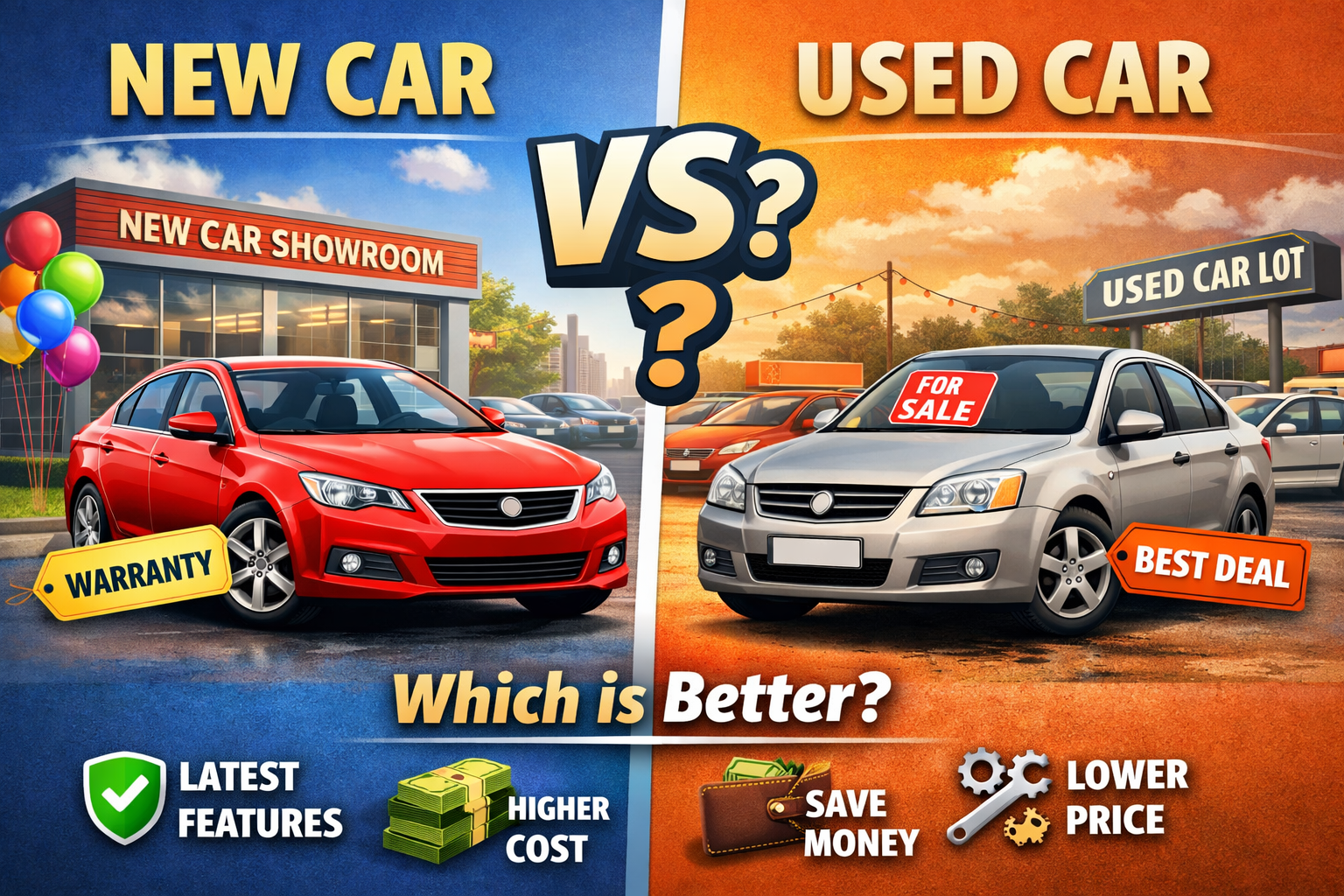
New Car vs Used Car has always been one of the most important and confusing decisions for car buyers. Whether you are a first-time buyer or someone looking to upgrade, the choice can feel overwhelming. Both new and used cars have strong points — your final decision depends on your finances, driving needs, and risk comfort level.
In 2026, with rising vehicle prices, fluctuating interest rates, and improved certified pre-owned markets, the New Car vs Used Car debate is more relevant than ever. This comprehensive guide explores every factor — cost, depreciation, reliability, maintenance, and real-life examples — so you can make a confident and practical choice.
New Car vs Used Car: Meaning and Basics
When comparing a new car and a used car, the fundamental difference is ownership history. A new car comes straight from the manufacturer or an authorized dealership. A used car, on the other hand, has already been owned and driven by one or more people.
New Car: A brand-new car is untitled, with no previous owners. It usually includes full factory warranty, has the latest features and safety technology, and carries a fresh appeal — the “new car smell” and the excitement of being the first to drive it.
Used Car: A used car (also called pre-owned or second-hand) can be anywhere from a few months to several years old. It may have more mileage but is significantly cheaper. In today’s market, certified pre-owned (CPO) programs offered by major manufacturers have greatly improved the quality and reliability of used cars.
So, the New Car vs Used Car debate isn’t about which category is universally “better.” It’s about identifying which car matches your personal goals, lifestyle, and financial plan.
Why New Car vs Used Car Matters
Buying a car is one of the biggest financial commitments most families make after purchasing a home. It influences your monthly expenses, savings, lifestyle flexibility, and even long-term wealth accumulation.
Choosing wisely in the New Car vs Used Car decision can help you:
- Save lakhs of rupees through smart depreciation management.
- Avoid unnecessary EMIs or long-term loans.
- Enjoy a smoother driving experience with fewer repair hassles.
- Achieve better resale value when it’s time to upgrade.
- Plan for fuel, insurance, and maintenance efficiently.
Making a rushed or emotional decision often leads to regret — such as picking a car beyond your budget or one with hidden repair costs. Understanding both options deeply helps you make a financially sound choice.
New Car vs Used Car: How It Works
Example Scenario
Imagine Rahul, who has set aside ₹10 lakh for a car purchase in 2026.
- Option 1: Buy a brand-new hatchback worth ₹10 lakh.
- Option 2: Buy a 3-year-old premium sedan originally priced at ₹16 lakh, now available for ₹9 lakh.
In the first case, Rahul gets a new car with modern looks, warranty, and fewer worries during the first few years. But the depreciation hit is steep — the car’s value might drop 20–25% in the first year alone.
In the second case, he gets a higher-segment vehicle with better comfort, but the trade-off is potential repair costs and limited warranty coverage. Rahul must decide whether peace of mind or maximum value matters more to him when thinking about New Car vs Used Car.
Depreciation Example
Depreciation is the hidden cost of ownership. If a new car costs ₹10,00,000, after one year it may be worth only ₹8,00,000. After three years, it might fall to ₹6,00,000 or less depending on brand and condition. A used car bought at ₹6,00,000 may still retain ₹4,50,000 value after three years — showing how depreciation slows down with age and why a used option often looks better in the New Car vs Used Car comparison.
Cost Comparison: New vs Used
Let’s break down the approximate costs to understand how a New Car vs Used Car choice impacts your wallet.
| Factor | New Car | Used Car |
|---|---|---|
| Purchase Price | High | Lower |
| Depreciation | High in initial years | Slower after year 3 |
| Insurance | Higher premium | Cheaper |
| Maintenance | Low for 3 years | Higher |
| Loan Interest Rate | Lower | Higher |
| Warranty Coverage | Full warranty | Limited/none |
| Resale Value | Depends on brand | Better percentage return |
Benefits of New Car vs Used Car Choices
Advantages of Buying a New Car
- Latest Technology: New cars offer updated safety systems, infotainment features, and improved fuel economy.
- Full Warranty: Typically 3–5 years, reducing repair anxiety.
- Low Maintenance: New cars require minimal servicing initially.
- Higher Reliability: Since all parts are new, chances of breakdowns are minimal.
- Personalization: Choose exact colour, model, and accessories you want.
Buying new is ideal for people planning to keep their car long-term, or for those who prioritize reliability and hassle-free ownership. With modern financing options, monthly EMIs are more predictable, making budgeting easier for buyers stuck between a New Car vs Used Car decision.
Advantages of Buying a Used Car
- Lower Initial Cost: You can save 30–50% compared to a new one.
- Slower Depreciation: The biggest value drop already happened under the first owner.
- Cheaper Insurance: Premiums are calculated on current market value, not purchase price.
- Better Deals on Higher Models: You could buy a mid-range used SUV instead of a new-entry hatchback.
- Flexible Ownership: Easier to sell or upgrade without big financial loss.
Used cars are excellent for city drivers, new learners, or those who change vehicles frequently. With today’s inspection, warranty, and CPO programs, buying used has become safer than ever and often wins the New Car vs Used Car value battle.
Risks / Limitations
Risks of Buying a New Car
- Fast Depreciation: New cars can lose up to 30% of their value within two years.
- Higher Upfront Costs: Includes registration fees, road tax, and dealer markups.
- Insurance Bills: Comprehensive coverage is mandatory and costlier.
- Loan EMIs: Bigger loans can affect your monthly budget and credit flexibility.
- Risk of Overbuying: Emotional excitement may lead you to choose a model beyond your needs.
Risks of Buying a Used Car
- Unverified History: Without proper documentation, you may face issues such as odometer tampering or hidden accidents.
- Maintenance Uncertainty: Older cars might need frequent servicing.
- Limited Warranty: Unless you buy a certified pre-owned vehicle, repairs are on you.
- Outdated Technology: Missing features like advanced driver safety systems.
- Financing Difficulty: Higher interest rates and shorter loan durations.
To minimize risk in any New Car vs Used Car purchase, always get a trusted mechanic inspection, check RTO records, and buy from verified platforms or authorized dealers.
Myths and Common Mistakes in New Car vs Used Car Decisions
Myth 1: Used cars are always unreliable
Reality: A well-maintained, certified used car can serve smoothly for years — sometimes better than a poorly maintained new one.
Myth 2: New cars never have problems
Reality: Even new vehicles can have manufacturing issues or recalls. Always check for known service bulletins.
Myth 3: You need to be rich to buy a new car
Reality: It’s about financial discipline. A modest new car with low fuel and maintenance costs might make more sense than a luxury used car with high upkeep.
Common Mistakes to Avoid
- Skipping a mechanical inspection before buying used.
- Ignoring total cost of ownership (fuel, service, EMI, insurance).
- Focusing only on monthly EMI rather than full price.
- Failing to compare resale values before buying.
- Buying on impulse or brand image instead of needs.
Pro Tips for New Car vs Used Car Buyers
- Set a Clear Budget: Include registration, insurance, and accessories in your budget plan.
- Compare EMI vs Cash: Sometimes buying outright saves interest costs.
- Research Ownership Costs: Find estimated annual maintenance online for the models you’re considering.
- Check Car History: Use VIN or chassis number to check accident or flood records.
- Negotiate Smartly: For used cars, use inspection reports to get better prices.
- Don’t Rush: Always test drive at least two models before finalizing.
Certified Pre-Owned (CPO) – A Balanced New Car vs Used Car Option
Certified pre-owned vehicles are used cars that have undergone multi-point inspections and refurbishments directly by the manufacturer or authorized dealer. They offer almost-new reliability at a lower price. Many CPO vehicles even come with extended warranty and roadside assistance.
In India, brands like Maruti True Value, Toyota U Trust, Honda Auto Terrace, and Mahindra First Choice dominate this market segment. The CPO route suits buyers wanting assurance with affordability when facing the New Car vs Used Car choice.
Environmental Impact of New Car vs Used Car
Buying a used car is more eco-friendly than manufacturing a new one. Producing steel, plastics, and battery components requires significant energy and resources. By extending a vehicle’s life, you indirectly reduce carbon emissions and manufacturing waste.
However, newer cars often feature better fuel efficiency and lower emissions, especially hybrid and EV models. So, if you care about sustainability, comparing eco-performance is essential before deciding between a New Car vs Used Car purchase.
Resale Value and Long-Term Ownership
Brands like Toyota, Hyundai, and Maruti Suzuki hold resale value better than most. If you plan to sell your vehicle after 3–5 years, depreciation should be part of your New Car vs Used Car buying decision.
- New car owners: Expect steep value drop initially but better resale appeal later.
- Used car owners: Enjoy slower depreciation, meaning smaller financial loss upon resale.
Maintenance discipline also influences resale. Regular service records and accident-free history can boost resale price by 10–20%.
Real-World New Car vs Used Car Scenarios
Urban Commuter
If you drive short distances within the city, a fuel-efficient used hatchback may serve perfectly without heavy investment.
Frequent Highway Traveler
If you drive long distances, a new car with full warranty ensures stress-free performance and safety support.
First-Time Driver
Used cars are great learning platforms. You can upgrade later without fearing scratches or minor accidents impacting value.
Family Vehicle Buyer
Safety, comfort, and warranty matter more — a new or CPO car is often the best bet when evaluating New Car vs Used Car options.
Trusted External Resources for New Car vs Used Car Buyers
To make a well-informed decision when choosing between a new car and a used car, it is helpful to consult authoritative automotive and financial sources. The following external resources provide reliable data on depreciation, safety, resale value, and vehicle ownership costs.
Financial Comparison of New vs Used Cars – Investopedia
This guide explains the financial impact of buying a new or used car, including depreciation, loan costs, and long-term ownership expenses.
New Car vs Used Car Comparison – CarToq
CarToq provides an India-specific comparison covering maintenance costs, resale value, and real-world ownership experiences.
New vs Used Car Buying Guide – CarDekho
This article highlights practical buying tips, depreciation trends, and factors to consider before purchasing a new or pre-owned vehicle.
Indian Car Market Trends – Autocar India
Autocar India tracks automotive trends, safety updates, recalls, and model comparisons that affect new and used car buyers alike.
Vehicle Loan Guidelines – Reserve Bank of India (RBI)
The RBI provides official guidance on auto loans, interest structures, borrower rights, and lending practices followed by Indian banks.
FAQ Section: New Car vs Used Car
1. Is a new car better than a used car?
There’s no one-size-fits-all answer. Choose based on financial comfort, driving habits, and risk preference.
2. Which is cheaper in the long run?
A well-maintained used car is generally cheaper overall if you avoid heavy repairs.
3. Is financing easier for new cars?
Yes, new cars attract lower interest rates and higher loan-to-value ratios.
4. How old should a used car be?
Ideally 2–5 years old — this range balances depreciation with mechanical reliability.
5. Do used cars come with warranty?
Many certified used cars come with short-term warranty and roadside assistance. Check with the dealer before buying.
6. Which car has better resale value?
Used cars depreciate slower in percentage terms, but brand and condition are deciding factors.
7. Is insurance cheaper for used cars?
Yes, since the insured declared value (IDV) is lower, premiums are economical.
8. Should I buy a car before or after festive season deals?
Festive seasons like Diwali often include discounts, free accessories, or exchange bonuses—worth waiting for if you are buying new.
9. Is it safe to buy used cars online?
Yes, provided you verify seller reputation, inspect the car personally, and ensure RTO documents are in order.
10. How do I choose the right car for my budget?
For a deeper breakdown of budgeting, car price ranges, and EMI planning, you can read this detailed guide on how to choose the right car for your budget. This resource explains how to match car segments with your monthly income and financial goals before you decide on New Car vs Used Car.
Conclusion: New Car vs Used Car
The New Car vs Used Car debate has no universal winner. A new car offers the latest design, full warranty, and worry-free ownership — perfect for long-term planners. A used car provides unmatched savings, slower depreciation, and flexibility — ideal for cost-conscious or occasional drivers.
If peace of mind, reliability, and technology are your top priorities, go for a new vehicle. If value, practicality, and affordability matter more, a used car may be the smarter financial decision.
Ultimately, focus on your lifestyle, commute, and goals — not just trends or peer choices. Remember, the best car isn’t the newest or most expensive one — it’s the one that fits your life and financial plan perfectly, regardless of whether you choose a New Car vs Used Car option.
Disclaimer: The information provided in this article is intended for general informational and educational purposes only. Car prices, loan terms, insurance costs, resale values, and maintenance expenses may vary based on location, brand, dealer policies, market conditions, and individual circumstances. While every effort has been made to ensure accuracy, the content should not be considered financial, legal, or professional advice. Readers are advised to conduct their own research and consult authorized dealers, lenders, or qualified financial advisors before making any vehicle purchase or financing decision.
Pingback: Car Loan EMI Calculator: Monthly Payment, Formula & Examples
Pingback: Are Electric Cars Worth It in 2026? Costs, Benefits, Risks & FAQs
Pingback: Sedan vs SUV: Full Comparison, Pros, Cons & Which One Is Better in 2026
Pingback: Manual vs Automatic Cars: Automatic vs Manual Transmission-2026