
Introduction
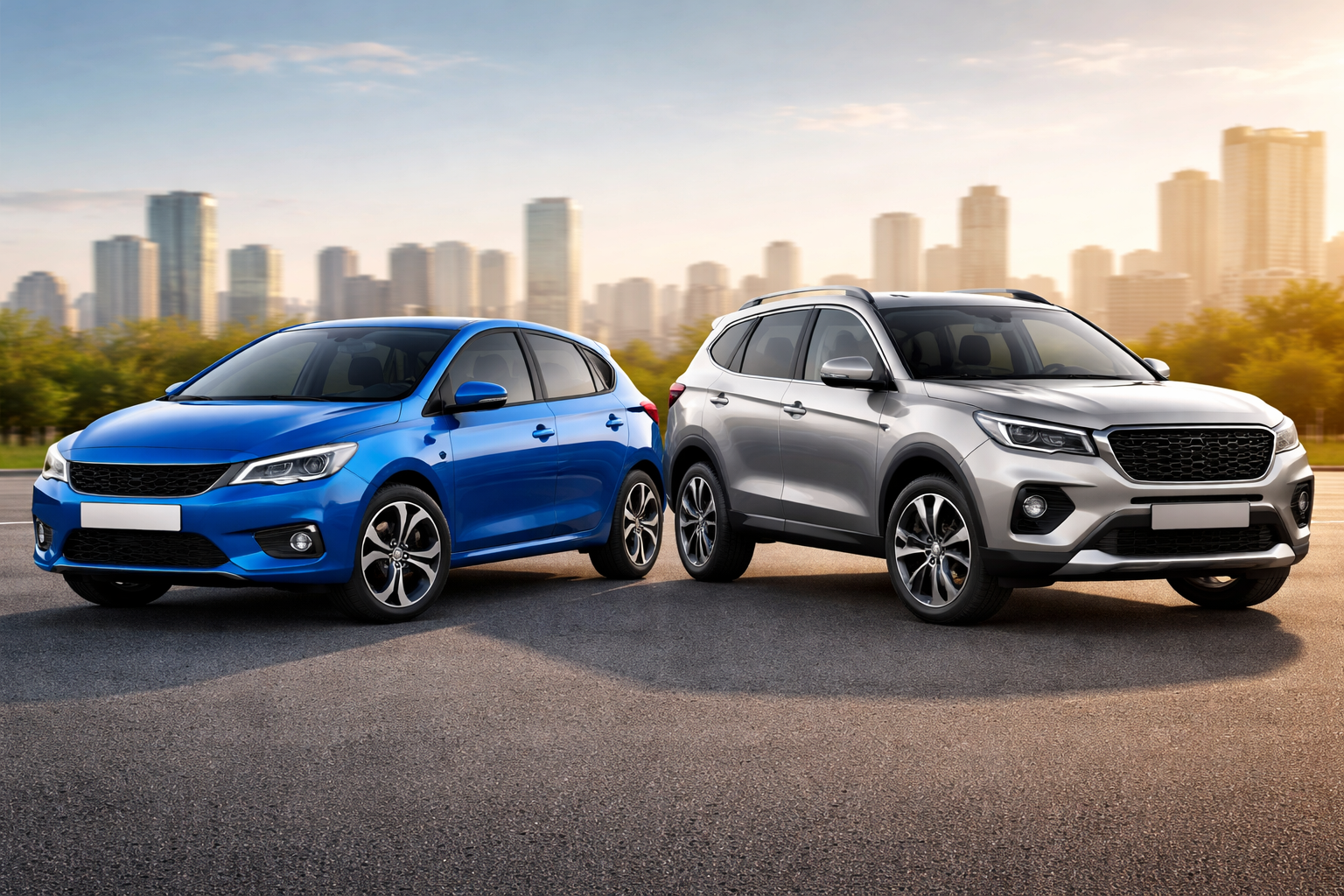
Hatchback vs compact SUV is one of the most searched and debated topics among car buyers today, especially in emerging markets like India. With rising fuel prices, congested city roads, and evolving family needs, choosing the right car body type has become more important than ever. Many buyers are torn between the practicality of a hatchback and the growing popularity of compact SUVs and small SUVs.
In this beginner-friendly guide, we break down the hatchback vs compact SUV debate in simple, easy-to-understand language. We’ll also include a detailed small SUV comparison so you can decide confidently based on budget, driving conditions, comfort, safety, and long-term ownership value.
Direct Answer (Quick Summary)
- Choose a hatchback if your priority is affordability, fuel efficiency, low maintenance, and easy city driving.
- Choose a compact SUV or small SUV if you want higher ground clearance, better road visibility, more space, and a stronger road presence.
If your usage is mostly city-based with tight parking, a hatchback makes more sense.
If you want comfort, family space, and future-ready versatility, a compact SUV is the better option.
Meaning / Explanation
What Is a Hatchback?
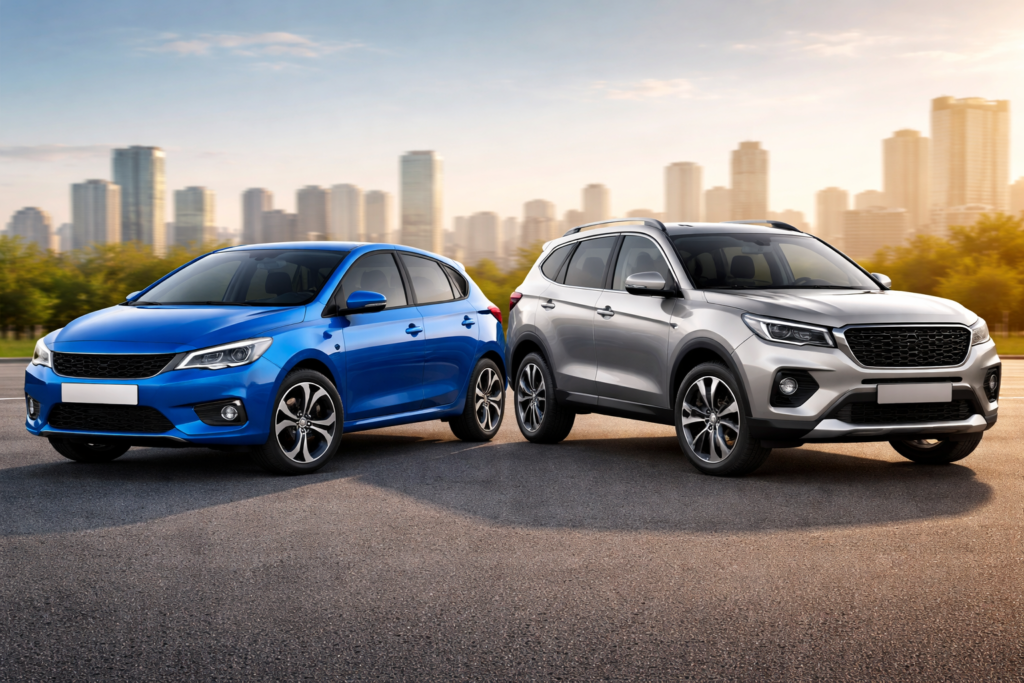
A hatchback is a compact car with a rear door that opens upward, giving access to the boot space directly from the cabin. Hatchbacks usually seat four to five passengers and are designed mainly for urban driving.
Key characteristics of hatchbacks:
- Compact size
- Lower ground clearance
- Lightweight construction
- Excellent fuel efficiency
- Affordable pricing
Popular hatchbacks include models like Maruti Swift, Hyundai i20, Tata Altroz, and Toyota Glanza. These cars are ideal for daily commuting and short trips.
What Is a Compact SUV / Small SUV?
A compact SUV or small SUV is built on a slightly larger platform than a hatchback and offers a taller stance. While not true off-road vehicles, compact SUVs are designed to handle mixed driving conditions comfortably.
Key characteristics of compact SUVs:
- Higher seating position
- Better ground clearance
- Larger cabin and boot
- More rugged design
- Improved road presence
Examples include Hyundai Venue, Tata Nexon, Kia Sonet, Maruti Brezza, and Mahindra XUV300.
Why It Matters
Choosing between a hatchback vs compact SUV matters because it directly affects your daily driving experience, expenses, and long-term satisfaction.
1. Cost of Ownership
The purchase price is just the beginning. Fuel, servicing, insurance, and resale value all depend on the type of vehicle you choose.
2. Driving Conditions
Indian roads vary from smooth highways to broken village roads. Ground clearance and suspension play a major role in comfort.
3. Family Requirements
A growing family needs space, safety, and comfort—factors where compact SUVs often perform better.
4. Future Usage
Many buyers keep cars for 7–10 years. What suits you today should also suit you tomorrow.
How It Works / Example
Real-Life Usage Scenarios
Case 1: Daily City Commuter
- Drives 25–30 km daily
- Heavy traffic and limited parking
- Mostly single or two passengers
Best choice: Hatchback
Reason: Easy maneuverability, better mileage, lower running cost.
Case 2: Small Family with Weekend Trips
- City driving during weekdays
- Highway travel on weekends
- Needs luggage space
Best choice: Compact SUV
Reason: Comfortable seating, larger boot, better ride quality.
Case 3: First-Time Car Buyer
- Budget conscious
- Learning to drive
- Low maintenance priority
Best choice: Hatchback
Reason: Affordable, forgiving to drive, economical.
Benefits
Benefits of Hatchbacks
- Lower Initial Cost
Hatchbacks are the most affordable entry point into car ownership. - Excellent Fuel Efficiency
Lighter weight results in higher mileage. - Easy Parking
Compact dimensions make parking stress-free in crowded cities. - Low Maintenance
Spare parts and service costs are generally lower. - Beginner-Friendly
Perfect for new drivers and learners.
Benefits of Compact SUVs / Small SUVs
- Higher Ground Clearance
Easily handles speed breakers, potholes, and rough roads. - Better Visibility
Raised seating position offers a commanding view of the road. - Spacious Interiors
More headroom, legroom, and boot space. - Better Highway Comfort
More stable and confident at higher speeds. - Strong Resale Value
SUVs generally retain value better in the used car market.
Risks / Limitations
Limitations of Hatchbacks
- Struggles on bad roads and waterlogged areas
- Lower seating position may feel uncomfortable on long drives
- Limited boot space for family travel
- Less road presence compared to SUVs
Limitations of Compact SUVs
- Higher purchase price
- Slightly lower fuel efficiency
- Higher insurance and service costs
- Parking can be difficult in congested areas
Common Mistakes / Myths
Myth 1: SUVs Are Always Safer
Safety depends on build quality, airbags, and crash ratings—not just size.
Myth 2: Hatchbacks Are Outdated
Modern hatchbacks offer premium features and strong safety ratings.
Myth 3: Compact SUVs Are True Off-Roaders
Most compact SUVs are designed for city and highway use, not hardcore off-roading.
Myth 4: Bigger Car Means Better Status
Practicality matters more than size for daily usage.
Small SUV Comparison (Detailed Analysis)
Hatchback vs Small SUV Comparison Table
| Feature | Hatchback | Small SUV |
|---|---|---|
| Price | Lower | Higher |
| Mileage | High | Moderate |
| Ground Clearance | Low | High |
| Cabin Space | Adequate | Spacious |
| Boot Space | Limited | Larger |
| Maintenance | Low | Moderate |
| Resale Value | Average | High |
Safety Comparison
Hatchbacks today come with multiple airbags, ABS, and stability control in premium variants. However, compact SUVs often feel safer due to:
- Higher seating
- Stronger body structure
- Better crash-test ratings in many models
Safety should always be checked model-wise rather than body-style-wise.
Technology & Features Comparison
Modern hatchbacks offer:
- Touchscreen infotainment
- Connected car tech
- Automatic climate control
Compact SUVs often add:
- 360-degree cameras
- Wireless charging
- Ventilated seats
- Advanced driver-assistance features (in some models)
Ownership Cost Comparison
Hatchback Ownership
- Lower EMI
- Better mileage
- Cheaper insurance
- Lower service bills
Compact SUV Ownership
- Higher EMI
- Slightly higher fuel cost
- Better resale value
- More comfort for long-term ownership
For official vehicle safety standards and regulations in India, refer to the Ministry of Road Transport and Highways (MoRTH) .
To understand car safety ratings and crash test performance, visit Global NCAP , an independent vehicle safety assessment organization.
For detailed information on fuel efficiency norms and testing procedures, check Bureau of Energy Efficiency (BEE) .
For unbiased automotive reviews and technical insights, you can explore Autocar India .
To learn about driving safety tips and road awareness, visit Government of India Road Safety Portal .
If you are still deciding between different car types, you may also find our detailed guide on manual vs automatic cars helpful, especially when choosing the right transmission for city and highway driving.
For buyers comparing larger vehicle segments, our in-depth comparison of sedan vs SUV explains comfort, performance, and ownership costs in detail, which complements the hatchback vs compact SUV discussion.
FAQ Section
FAQ Section: Hatchback vs Compact SUV
- Which is better: hatchback or compact SUV?
It depends on your driving needs, budget, and family size. Hatchbacks suit city use, while compact SUVs are better for mixed driving. - Are compact SUVs good for city driving?
Yes, compact SUVs can be driven comfortably in cities, though parking may be slightly challenging in tight spaces. - Do hatchbacks offer enough safety?
Yes, modern hatchbacks offer good safety if you choose models with strong build quality and good crash-test ratings. - Which gives better mileage: hatchback or compact SUV?
Hatchbacks usually deliver better fuel efficiency due to lower weight and smaller engines. - Is maintenance higher for compact SUVs?
Yes, compact SUVs generally have slightly higher maintenance and service costs than hatchbacks. - Are small SUVs suitable for first-time buyers?
Yes, but hatchbacks are easier to handle, park, and maintain for first-time drivers. - Which is better for long highway trips?
Compact SUVs provide better comfort, seating posture, and stability for long-distance highway driving. - Which has better resale value: hatchback or compact SUV?
Compact SUVs generally have higher resale demand and better resale value. - Which is better for Indian road conditions: hatchback or compact SUV?
Compact SUVs are better suited for Indian roads due to higher ground clearance and stronger suspension. - Is a compact SUV harder to drive than a hatchback?
No, modern compact SUVs are easy to drive thanks to light steering and driver-assist features. - Which car type is better for senior citizens?
Compact SUVs are better because the higher seating position makes entry and exit easier. - Are hatchbacks becoming obsolete due to SUVs?
No, hatchbacks remain popular because of affordability, fuel efficiency, and city practicality. - Which has better boot space: hatchback or compact SUV?
Compact SUVs usually offer larger boot space, making them more suitable for family trips. - Is insurance cost higher for compact SUVs?
Yes, insurance premiums for compact SUVs are generally higher due to higher vehicle value. - Which is better for first-time long-distance drivers?
Compact SUVs are more comfortable and confidence-inspiring for new drivers on highways. - Do compact SUVs consume more fuel than hatchbacks?
Yes, compact SUVs usually consume slightly more fuel because of higher weight. - Which vehicle type is better for resale value in India?
Compact SUVs typically have better resale value due to higher market demand. - Can hatchbacks be used for highway driving safely?
Yes, hatchbacks are safe for highways if they have good safety ratings and are driven responsibly. - Which is better for daily office commute?
Hatchbacks are ideal for daily commutes due to better mileage, easy parking, and low running costs. - Should I choose a hatchback or compact SUV for long-term ownership?
If budget allows and future needs may change, a compact SUV is usually the more future-proof option.
Conclusion
The hatchback vs compact SUV decision ultimately depends on your lifestyle, budget, and future plans. Hatchbacks are perfect for city-focused users who want affordability and efficiency. Compact SUVs and small SUVs, on the other hand, offer space, comfort, and adaptability, making them ideal for families and long-term ownership.
Instead of following trends, focus on how you will actually use the car. A well-informed choice today will save money, reduce stress, and increase satisfaction for years to come.
Disclaimer
This article is intended for informational and educational purposes only. Vehicle specifications, prices, mileage, safety ratings, and features may vary by brand, model year, and region. Readers are advised to conduct personal research, verify information with authorized dealerships, and take test drives before making any purchase decisions. The author does not endorse or promote any specific vehicle brand or model.