
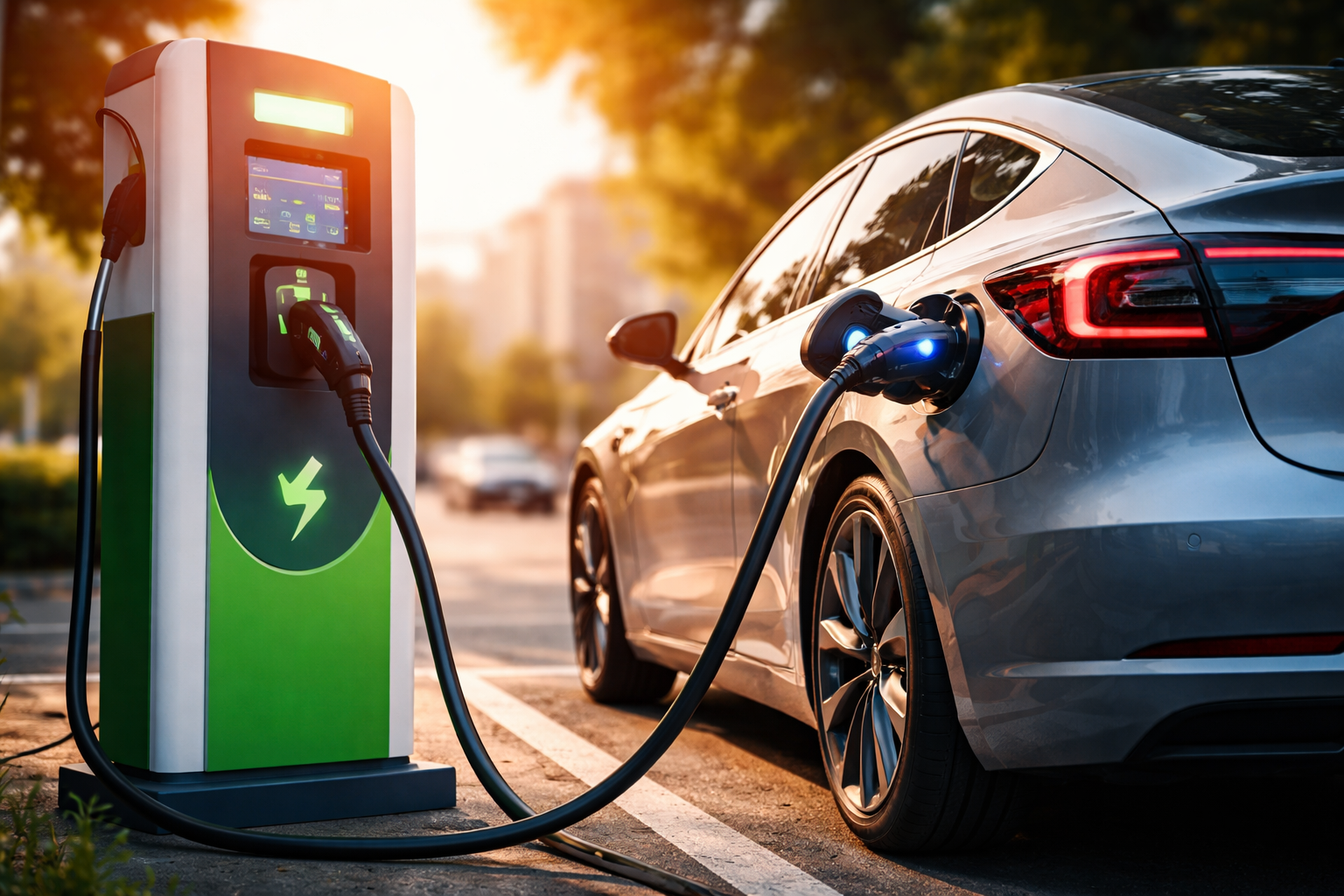
EV Charging Cost: A Complete Guide to Electric Car Charging Cost
EV charging cost is one of the most important factors people consider before buying an electric vehicle. Understanding electric car charging cost helps you compare EVs with petrol or diesel cars and avoid hidden surprises. Simply put, EV charging cost refers to how much money you spend to charge your electric vehicle at home, public charging stations, or fast chargers.
For beginners, EV charging may seem confusing, but it’s actually straightforward. Costs depend on electricity rates, charger type, battery size, and charging habits. In India, where electricity tariffs vary by state, these factors can significantly impact your real-world savings. In this guide, you’ll get a clear, honest, and beginner-friendly explanation—no jargon, no hype—just real numbers and practical examples.
What Is EV Charging Cost? (Meaning & Explanation)
EV charging cost is the total amount you pay to recharge your electric vehicle’s battery using electricity instead of fuel. Unlike petrol or diesel cars, where cost is measured per liter, electric car charging cost is measured per kilowatt-hour (kWh).
Every EV has a battery capacity (for example, 40 kWh, 60 kWh, or 75 kWh). The cost of charging depends on:
- Electricity price per kWh (home, commercial, or EV-specific tariff)
- Battery size and usable capacity of your EV
- Charging location (home, workplace, public AC, or DC fast charger)
- Charging efficiency, losses, and driving efficiency
If electricity costs ₹8 per kWh and your EV battery is 40 kWh, a full charge costs roughly ₹320. In real-world use, you should add around 10–15% for charging losses, which increases the effective cost slightly. Fast chargers and certain commercial connections may also include higher tariffs, fixed charges, or service fees, pushing the per kWh rate higher.
To understand whether EVs make financial sense overall, you can also explore this detailed analysis:
Are Electric Cars Worth It in 2026?
Why EV Charging Cost Matters
EV charging cost matters because it directly impacts your monthly transportation expenses and long-term ownership experience. While electric vehicles are often marketed as “cheap to run,” the actual savings depend heavily on how much you drive and where you usually charge.
Here’s why understanding charging cost is crucial:
- Budget planning: Helps you estimate monthly and yearly running expenses and compare them with your current fuel bills.
- Accurate comparison: Allows a fair comparison between EVs and petrol/diesel vehicles, especially on cost per kilometer.
- Charging strategy: Guides decisions like installing a home charger, using workplace charging, or relying on public networks.
- Long-term ownership: Impacts total cost of ownership (TCO), including battery life, maintenance, and infrastructure costs.
Many buyers focus only on vehicle price and potential savings but underestimate electricity tariffs, public charging premiums, or installation costs. Knowing the true electric car charging cost in your city helps set realistic expectations and leads to better purchase and usage decisions.
For a broader comparison of vehicles and ownership factors, check:
Car Comparison Guides
How EV Charging Cost Works (With Examples)
To properly understand EV charging cost, break it into simple steps using a real-world example. This will help you calculate your own cost per charge and cost per kilometer.
Step 1: Know Your Battery Size
Every EV has a rated battery capacity, usually expressed in kWh. For example:
- Small city EV: 20–30 kWh
- Mid-size EV SUV: 40–60 kWh
- Premium EV: 70–100+ kWh
Example: Suppose your car has a 50 kWh battery.
Step 2: Find Your Electricity Rate
Check your latest electricity bill to find the rate per unit (1 unit = 1 kWh). Residential tariffs in many Indian cities typically fall around ₹6–₹10 per kWh, while commercial or fast-charging tariffs can be higher.
Example: Home electricity rate: ₹7 per kWh.
Step 3: Calculate Full-Charge Cost
The basic formula is:
Full charge cost = Battery capacity (kWh) × Electricity rate (₹/kWh)
Using the example:
50 kWh × ₹7 = ₹350 for a theoretical 0–100% full charge.
In practice, you should consider charging losses of around 10–15%. With 10% loss, the effective energy drawn from the grid is about 55 kWh:
55 kWh × ₹7 = ₹385 actual cost for a full charge.
Step 4: Calculate Cost Per Kilometer
Now estimate the real-world range of your EV on a full charge. Assume your EV delivers 300 km per charge in typical mixed driving conditions.
Cost per km = Total charging cost ÷ Range
₹385 ÷ 300 km = approximately ₹1.28 per km.
For comparison, a petrol car that gives 15 km per liter at ₹105 per liter has a per km cost of around ₹7. That means the EV can be roughly 70–80% cheaper per kilometer in running cost, depending on your exact tariff and driving efficiency.
Home vs Public vs Fast Charging Cost
Different charging locations come with different prices and speeds:
| Charging Type | Typical Rate (₹/kWh) | Approx. Cost for 40 kWh | Use Case |
|---|---|---|---|
| Home charging (AC) | ₹6–₹10 | ₹240–₹400 | Daily overnight charging |
| Public AC charging | ₹10–₹15 | ₹400–₹600 | Top-ups in city, malls, offices |
| DC fast charging | ₹15–₹25 | ₹600–₹1,000 | Highway trips, emergencies |
You can calculate your own exact cost using this free tool:
Fuel & EV Cost Calculator
Benefits of Understanding EV Charging Cost
Understanding EV charging cost gives you multiple advantages beyond simple savings. It helps you tailor your charging habits, choose the right tariff, and optimize long-term ownership.
- Lower running costs: EVs are usually much cheaper per km than petrol or diesel vehicles, especially when charged at home using standard residential tariffs.
- Predictable expenses: Electricity prices tend to be more stable over time than fuel prices, making your monthly budget more predictable.
- Smart charging strategies: By shifting charging to off-peak hours or using dedicated EV tariffs where available, you can further reduce your cost per kWh.
- Environmental benefits: Lower emissions per km compared to ICE vehicles, especially when the grid progressively adds more renewable energy.
- Reduced maintenance: EVs have fewer moving parts, no engine oil changes, and reduced brake wear due to regenerative braking, contributing to lower overall running costs.
When you combine an EV with rooftop solar panels, your effective EV charging cost can drop dramatically. For many users with solar, the marginal cost of daytime charging becomes very low, and over a few years, the system can pay for itself through fuel savings.
Risks and Limitations of EV Charging Cost
While EV charging offers attractive economics, there are also risks and limitations that buyers should be aware of before making a decision. Understanding these helps you avoid unpleasant surprises later.
- Public fast charging is expensive: DC fast chargers often cost 2–3 times more per kWh than home charging. If you rely heavily on fast charging, your overall running cost can approach or even exceed that of an efficient petrol car.
- Electricity tariffs vary: Different states, cities, and even housing societies have different tariffs, fixed charges, and slabs. Peak-hour tariffs or commercial connections can significantly increase the per kWh rate.
- Infrastructure gaps: In some regions, public charging infrastructure is still limited, forcing you to plan carefully or drive out of your way to reach chargers.
- Charging losses: There are always some energy losses (often 5–15%) in the charging process due to heat and conversion, which means you pay for slightly more energy than what actually reaches the battery.
- Battery degradation: Over time, the usable capacity of an EV battery slowly decreases. This reduces the range you get per full charge, slightly increasing your cost per km as the vehicle ages.
Additionally, the upfront cost of installing a home charger, upgrading electrical wiring, or adding a dedicated EV connection is often forgotten during initial cost calculations. These are one-time or infrequent expenses, but should be included when evaluating the overall economics.
To understand overlooked ownership expenses, read:
Hidden Costs of Buying a Car
Common Mistakes and Myths About EV Charging Cost
There are several misconceptions about EV charging cost that can mislead buyers. Let’s address some of the most common myths with simple explanations.
Myth 1: EV charging is always free
Reality: Completely free chargers are rare and usually part of promotional offers, loyalty programs, or limited-time incentives. Most public chargers bill you per kWh or per minute, and even “free” charging in malls or offices may be included indirectly in parking charges or membership fees.
Myth 2: Public charging is cheap
Reality: While some subsidized public chargers are affordable, fast-charging stations are often significantly more expensive than home charging. In some cases, cost per km at fast chargers can approach or exceed petrol costs, especially for less efficient EVs or at premium networks.
Myth 3: One charging cost fits all EVs
Reality: EV models differ in battery size, efficiency (km per kWh), and charging curves. A small, efficient EV might deliver very low cost per km, while a heavier, performance-focused EV with a large battery will cost more per full charge and may consume more energy per km.
Myth 4: EVs have zero running cost
Reality: While EVs avoid fuel costs, they still incur expenses such as electricity, tire replacements, brake maintenance, insurance, possible software or connectivity subscriptions, and occasional battery or component repairs outside warranty.
Myth 5: Home charging is always possible
Reality: Many apartment complexes, rented houses, or older buildings may not have easy access to dedicated parking with a power socket. In such cases, installation may require society approval, additional wiring, or reliance on shared charging infrastructure, which can affect convenience and cost.
Trusted External Resources on EV Charging Costs
For readers who want deeper insights and official data on EV charging cost and electric car charging cost, the following trusted external resources can be helpful:
- U.S. Department of Energy – Home EV Charging Guide
- International Energy Agency – Global EV Outlook
- Consumer Reports – Electric Car Charging Costs Explained
Frequently Asked Questions (FAQ)
1. What is the average EV charging cost per month?
For most users driving 1,000–1,500 km per month and charging mainly at home, monthly EV charging cost usually ranges between ₹800–₹2,500. This depends on electricity rates, driving style, vehicle efficiency, and how much public charging you use.
2. Is home charging cheaper than public charging?
Yes, home charging is usually 50–70% cheaper than public fast charging. If you have access to a dedicated home charger and standard residential tariffs, your per kWh cost will almost always be lower than commercial or public network rates.
3. How much does fast charging cost?
Fast charging may cost around ₹15–₹25 per kWh depending on location, operator, and power level. For a 40 kWh session, this translates to ₹600–₹1,000 or more, which is much higher than a similar charge at home.
4. Does EV charging increase electricity bills?
Yes, your electricity bill will increase because your EV is now part of your household energy consumption. However, this extra cost is usually less than what you would otherwise spend on petrol or diesel for the same distance, resulting in net savings.
5. Is EV charging cheaper than petrol?
In most cases, EV charging is significantly cheaper per kilometer than petrol or diesel, especially when charged at home. Even with rising electricity prices, the per km cost of EVs generally remains lower than that of conventional vehicles.
6. Can solar power reduce EV charging cost?
Yes, solar power can substantially reduce EV charging cost over time. Once you install rooftop solar, the marginal cost of charging your EV during sunny hours can become very low, especially if you size the system to match your daily driving needs.
7. Do EV charging costs increase over time?
Electricity prices may rise over time due to inflation, policy changes, or infrastructure costs. However, historically, electricity prices have tended to be more stable than petrol or diesel, which are affected by global crude oil markets and taxes.
Conclusion
EV charging cost plays a crucial role in deciding whether an electric vehicle is right for you. While EVs generally offer lower running costs than petrol or diesel cars, the actual savings depend on charging habits, electricity prices, driving patterns, and access to infrastructure such as home and workplace chargers.
By understanding electric car charging cost clearly—without myths or marketing— you can plan better, choose the right EV, and optimize your charging strategy. This allows you to save more over the long term and enjoy the benefits of electric mobility with confidence and peace of mind.
Disclaimer: The information provided in this article is for general informational and educational purposes only. EV charging costs, electricity tariffs, vehicle efficiency, and savings may vary based on location, electricity provider, vehicle model, driving habits, and charging infrastructure. Prices and figures mentioned are indicative and subject to change over time. This content should not be considered financial, technical, or investment advice. Readers are advised to verify details with official sources, electricity boards, EV manufacturers, or qualified professionals before making any purchase or financial decisions. The author and website are not responsible for any losses or decisions made based on this information.