
Introduction
Car ownership cost is one of the most important yet least understood aspects of personal finance. The cost of owning a car is not limited to the price you see in advertisements or the monthly EMI you pay to the bank. Instead, it is a long-term financial commitment that continues for as long as the car remains in your possession.
For many people, buying a car is an emotional decision. It represents freedom, convenience, and social status. However, emotions often hide the reality of recurring expenses such as fuel, insurance, maintenance, depreciation, and unexpected repairs. These costs quietly add up year after year and can significantly impact your financial stability if not planned properly.
This beginner-friendly guide explains everything about car ownership cost in simple language. You will learn what it means, why it matters, how it works in real life, its benefits, risks, common mistakes, and frequently asked questions. Whether you are planning to buy your first car or already own one, this article will help you understand the true cost of owning a car and make smarter decisions.
Direct Answer: What Is Car Ownership Cost?
Car ownership cost is the total amount of money you spend throughout the entire period you own a car. It includes the purchase price as well as all recurring and hidden expenses such as fuel, insurance, servicing, maintenance, repairs, taxes, depreciation, parking, and other related costs.
In simple terms, the cost of owning a car is not what you pay on the day you buy it. It is what you continue to pay every month and every year to keep the car running, legal, safe, and reliable.
Meaning / Explanation of Car Ownership Cost
Car ownership cost represents the complete financial picture of owning a vehicle. Most buyers focus only on the upfront cost or the monthly EMI, but these are just small parts of the overall expense.
A car is a depreciating asset. This means its value decreases over time while its running and maintenance costs increase. Understanding this concept is essential to understanding car ownership cost.
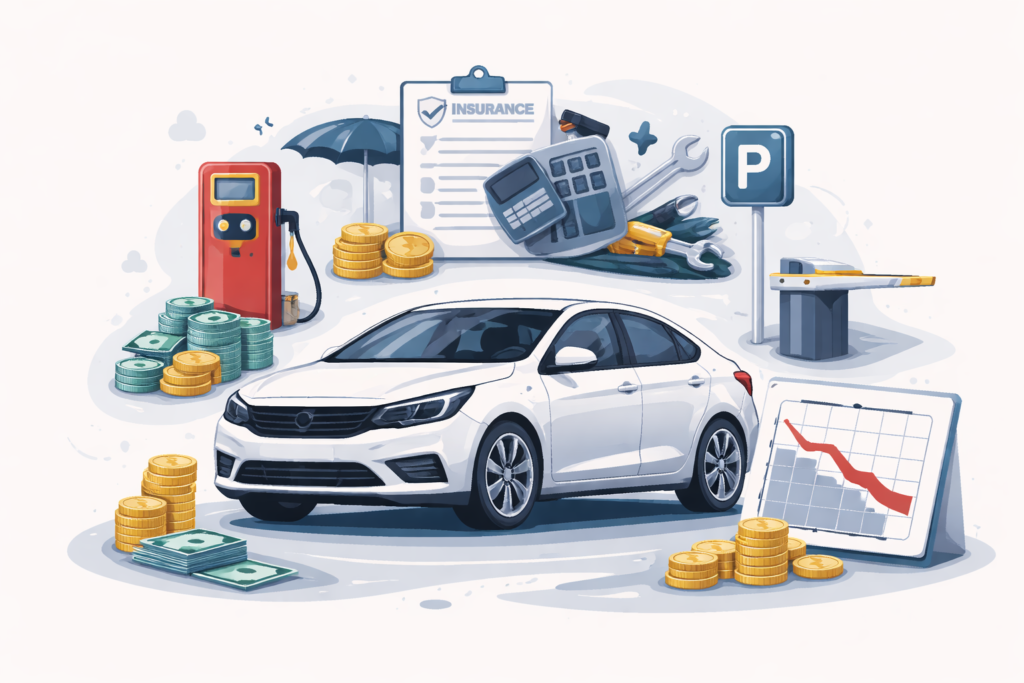
Major Components of Car Ownership Cost
- Purchase Price
This includes the ex-showroom price of the car. It is the most visible cost but not the most important in the long run. - Registration and Road Tax
Government taxes and registration fees can add a significant amount to the initial cost. - Insurance Cost
Insurance is mandatory and must be renewed every year. Comprehensive insurance costs more but offers better protection. - Fuel Cost
Fuel is one of the biggest recurring expenses. The cost depends on mileage, fuel type, and usage. - Maintenance and Servicing
Regular servicing is necessary to keep the car in good condition and prevent major repairs. - Repair Costs
Unexpected repairs due to wear and tear, accidents, or component failure can increase ownership cost. - Depreciation
Depreciation is the reduction in the car’s resale value over time. It is often the largest hidden cost. - Parking and Tolls
Parking fees and toll charges add to the daily cost of owning a car. - Miscellaneous Expenses
Car washing, accessories, tyres, batteries, and upgrades also contribute to ownership cost.
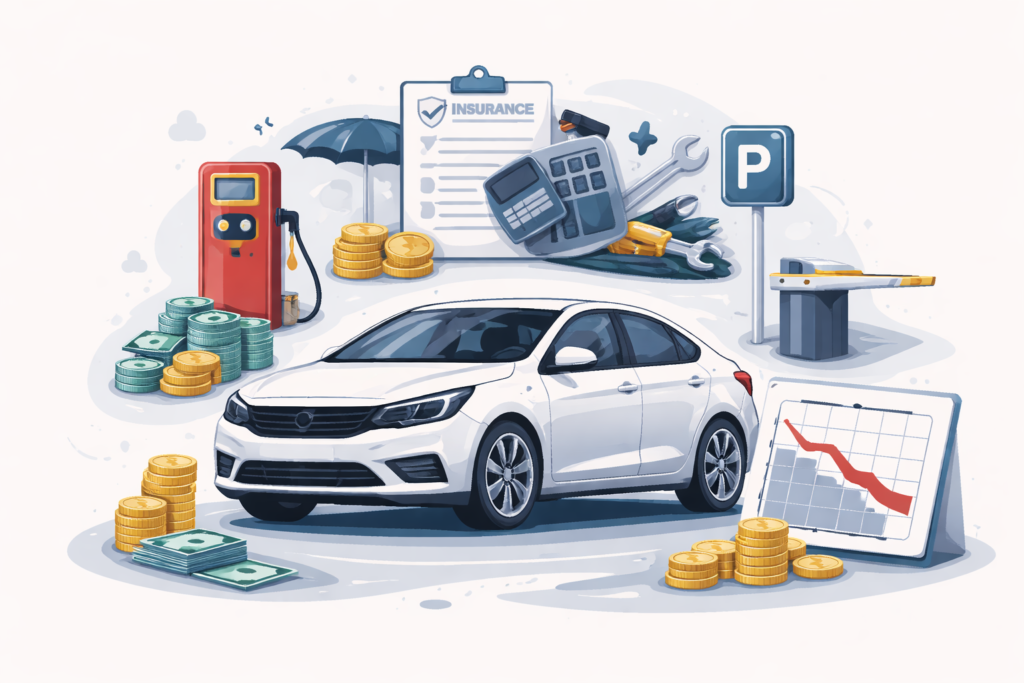
All these factors combined determine the true cost of owning a car.
Why Car Ownership Cost Matters
Understanding car ownership cost is crucial because it directly affects your financial well-being.
Helps Avoid Financial Stress
Many people can afford the EMI but struggle with fuel, insurance, and maintenance expenses. Knowing the full cost in advance prevents this stress.
Improves Decision-Making
When you understand ownership cost, you choose cars based on long-term affordability rather than short-term attraction.
Prevents Over-Borrowing
Ignoring ownership cost often leads to excessive borrowing and long-term debt problems.
Supports Better Budgeting
Car ownership cost helps you estimate monthly and annual expenses accurately.
Protects Long-Term Goals
High car expenses can delay important goals like buying a house, saving for education, or retirement planning.
How Car Ownership Cost Works (Detailed Example)
Let us understand how car ownership cost works with a realistic example.
Example: Mid-Range Hatchback
Purchase Price (Ex-showroom): ₹8,00,000
Registration and Road Tax: ₹1,00,000
Insurance (First Year): ₹25,000
Total Initial Cost: ₹9,25,000
Annual Running Costs
Fuel Cost: ₹70,000
Insurance Renewal: ₹15,000
Servicing and Maintenance: ₹20,000
Repairs and Replacements: ₹10,000
Miscellaneous Expenses: ₹5,000
Total Annual Running Cost: ₹1,20,000
Depreciation Impact
Year 1 depreciation: 15%
Value lost: ₹1,20,000
Average annual depreciation over 5 years: ₹80,000
Total depreciation over 5 years: ₹4,00,000
Total 5-Year Ownership Cost
Initial Cost: ₹9,25,000
Running Costs (5 years): ₹6,00,000
Depreciation: ₹4,00,000
Total Car Ownership Cost: ₹19,25,000
This example clearly shows how the cost of owning a car is much higher than its purchase price.
Benefits of Understanding Car Ownership Cost
Financial Awareness
You become aware of how much money your car actually consumes.
Better Car Selection
You may choose fuel-efficient, low-maintenance vehicles.
Reduced Long-Term Expenses
Proper planning reduces unnecessary spending.
Improved Peace of Mind
Unexpected expenses do not create panic.
Higher Savings Potential
Lower ownership costs mean more money for savings and investments.
Risks / Limitations of Car Ownership Cost
Cost Variability
Fuel prices and insurance premiums can change unexpectedly.
Unpredictable Repairs
Accidents and breakdowns increase expenses suddenly.
Inflation Impact
Maintenance and spare parts become more expensive over time.
Usage Dependency
High usage significantly increases fuel and maintenance costs.
Resale Market Fluctuations
Resale value depends on market demand and vehicle condition.
Despite these limitations, estimating ownership cost is still far better than ignoring it.
Common Mistakes and Myths About Car Ownership Cost
Myth 1: EMI Is the Main Expense
Reality: EMI is just one part of the total cost.
Myth 2: New Cars Are Always Cheaper to Maintain
Reality: Insurance and depreciation are highest in new cars.
Myth 3: Fuel Cost Is Predictable
Reality: Fuel prices fluctuate frequently.
Mistake 1: Ignoring Depreciation
Depreciation silently consumes your investment.
Mistake 2: Skipping Regular Maintenance
Delaying service leads to higher repair costs.
Mistake 3: Over-Accessorizing
Unnecessary accessories increase cost without adding value.
Mistake 4: Buying Beyond Budget
Stretching finances for a premium car often leads to regret.
- Government & Regulatory Authorities
Ministry of Road Transport & Highways (India)
👉 https://morth.nic.in
Use for road tax, vehicle registration, rules, and compliance costs.
Parivahan (Government Vehicle Portal)
👉 https://parivahan.gov.in
Useful for registration, RC, road tax, and vehicle ownership rules.
Insurance Authorities
Insurance Regulatory and Development Authority of India (IRDAI)
👉 https://www.irdai.gov.in
Authoritative source for car insurance rules and premium guidelines.
Insurance Information Bureau of India
👉 https://www.iib.gov.in
Helpful for understanding insurance-related data and trends.
Fuel & Energy Cost References
Petroleum Planning & Analysis Cell (PPAC)
👉 https://www.ppac.gov.in
Official source for fuel prices and trends affecting running costs.
International Energy Agency (IEA)
👉 https://www.iea.org
Useful for fuel cost trends and energy efficiency references.
Depreciation & Automotive Research
Automotive Research Association of India (ARAI)
👉 https://www.araiindia.com
Trusted authority for vehicle efficiency, testing, and standards.
Society of Indian Automobile Manufacturers (SIAM)
👉 https://www.siam.in
Industry-level insights on vehicle ownership trends.
Personal Finance & Cost Analysis
Reserve Bank of India (RBI)
👉 https://www.rbi.org.in
Useful for loan interest rates and auto finance references.
Consumer Financial Education Resources (General)
👉 https://consumereducation.in
Helpful for budgeting and financial planning context.
FAQ Section: Car Ownership Cost
- What is car ownership cost?
It is the total lifetime expense of owning a car, including purchase and running costs. - Is the cost of owning a car higher than its price?
Yes, in most cases, ownership cost exceeds purchase price over time. - How can I reduce car ownership cost?
Choose fuel-efficient cars, maintain regularly, and avoid unnecessary expenses. - Does mileage affect ownership cost?
Yes, higher mileage increases fuel, servicing, and repair costs. - Is depreciation a real cost?
Yes, it reduces the resale value of your car. - Are electric cars cheaper to own?
They generally have lower running and maintenance costs. - How long should I keep a car?
Keeping a car for 7 to 10 years usually reduces annual ownership cost. - Does insurance cost decrease over time?
Generally yes, depending on car age and claim history. - Should I calculate ownership cost before buying a car?
Yes, it helps you avoid financial stress and bad decisions. - Is owning a car always necessary?
Not always. Depending on usage, public transport or rentals may be cheaper.
Conclusion
Car ownership cost is much more than the amount you pay to buy a car. The true cost of owning a car includes fuel, insurance, maintenance, depreciation, repairs, and many other expenses that accumulate over time. Ignoring these costs can lead to financial strain, while understanding them empowers you to make confident and informed decisions.
A car should enhance your lifestyle, not burden your finances. By understanding car ownership cost, you can enjoy the convenience of owning a car without compromising your financial future.
Disclaimer
This article is for informational and educational purposes only. Car ownership costs vary depending on vehicle type, location, usage, fuel prices, insurance policies, and market conditions. The examples provided are illustrative and do not constitute financial advice. Readers are advised to evaluate their personal financial situation and consult qualified professionals before making vehicle purchase or financial decisions.