
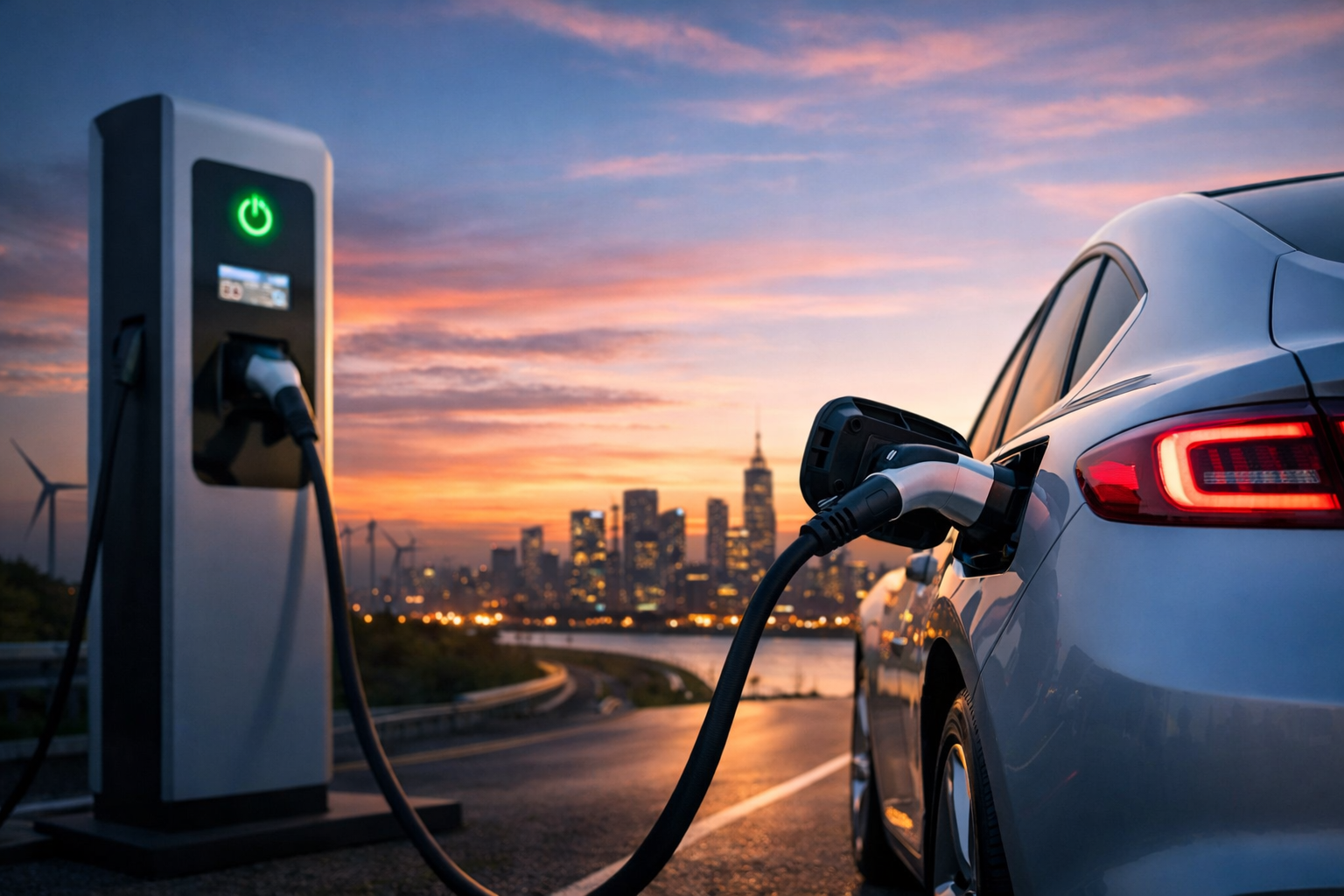
Are electric cars worth it in 2026? This is one of the most common questions asked by car buyers today, especially as fuel prices rise and governments push toward cleaner mobility. Electric cars in 2026 are no longer experimental—they are mainstream, practical, and increasingly affordable.
If you are a beginner trying to understand whether switching to an electric vehicle (EV) makes sense for your budget, lifestyle, and long-term goals, this guide is for you. We will explore how electric cars work, why they matter, their benefits, limitations, common myths, and real-world examples—so you can make an informed decision with confidence.
What Does “Electric Cars” Mean? (Simple Explanation)
An electric car is a vehicle powered entirely or primarily by electricity instead of petrol or diesel. Unlike traditional internal combustion engine (ICE) vehicles, electric cars use an electric motor and a rechargeable battery pack.
There are three main types of electric vehicles:
- Battery Electric Vehicles (BEVs): Fully electric cars with no fuel engine (e.g., Tesla, Tata Nexon EV).
- Plug-in Hybrid Electric Vehicles (PHEVs): Use both electricity and fuel.
- Hybrid Electric Vehicles (HEVs): Partially electric but cannot be plugged in.
In 2026, when people talk about electric cars, they usually mean fully electric vehicles that can be charged at home or public charging stations.
Why Electric Cars Matter in 2026
Electric cars matter more in 2026 than ever before due to a combination of economic, environmental, and technological reasons. EVs now represent a significant and growing share of new vehicle sales in many markets, and several countries have set timelines to phase out pure petrol or diesel cars.
1. Rising Fuel Costs
Petrol and diesel prices continue to increase globally, especially in countries that import crude oil. Electricity, on the other hand, remains significantly cheaper per kilometer driven, which is why many daily commuters and cab operators are shifting to EVs.
2. Environmental Concerns
Electric vehicles produce zero tailpipe emissions, helping reduce local air pollution and greenhouse gas emissions. This is critical for large cities that regularly struggle with poor air quality and stricter emission norms.
3. Government Policies & Incentives
Many governments now offer subsidies, tax benefits, lower registration fees, and toll or parking exemptions for EV buyers to accelerate adoption. In India, central and state-level incentives combined with national EV schemes can reduce the effective on-road cost of an EV.
4. Better Infrastructure
By 2026, public and private charging networks are expanding rapidly, with fast chargers installed along key highways, malls, office complexes, and housing societies. Dedicated national schemes and state initiatives are supporting this rollout, making long-distance EV travel easier than a few years ago.
How Electric Cars Work (With a Simple Example)
Electric cars work by converting stored electrical energy into mechanical energy to move the vehicle. Instead of burning fuel and generating heat, they draw power from a high-voltage battery, send it to an electric motor, and use that motor to drive the wheels.
Basic Working Process:
- You charge the battery using a home charger or public station.
- The battery supplies power to an electric motor.
- The motor turns the wheels instantly.
- Regenerative braking recharges the battery while slowing down.
Real-Life Example
Imagine charging your phone overnight and using it all day. An electric car works the same way—just on a much larger scale, with advanced safety systems, cooling, and battery management to keep everything stable and efficient.
You can estimate ownership costs and compare options using tools like this Car Loan EMI Calculator, which helps you understand monthly payments for EVs versus petrol cars.
Benefits of Electric Cars in 2026
1. Lower Running Costs
Electric cars can cost substantially less per kilometer compared to petrol or diesel vehicles, depending on local electricity tariffs and fuel prices. For people who drive a lot daily, this translates into major savings on monthly commuting expenses.
2. Minimal Maintenance
EVs have fewer moving parts than ICE cars—no engine oil, fuel pump, or complex exhaust systems—so routine maintenance is usually simpler and cheaper over time. Brake wear can also be lower because regenerative braking handles a significant part of deceleration.
3. Smooth & Silent Driving
Electric motors deliver instant torque, which means quick and smooth acceleration from a standstill without engine noise or vibrations. This makes EVs feel more refined in city traffic and during highway cruising.
4. Eco-Friendly
EVs have zero tailpipe emissions, which directly improves urban air quality and supports climate goals when combined with cleaner electricity generation. Over their lifetime, they typically emit less CO₂ than comparable petrol or diesel cars.
5. Government Incentives
In 2026, several Indian states and many global markets offer incentives such as upfront subsidies, road tax exemptions, and registration fee waivers on EVs, reducing the effective purchase price. Some cities also give EVs preferred parking or access to low-emission zones.
6. Long-Term Savings
Although upfront costs may be higher, total cost of ownership over 5–8 years is often lower for EVs, especially if you drive regularly and can charge at home or at subsidized public chargers. Lower fuel and maintenance expenses usually compensate for the higher buying price over time.
Still deciding between vehicle types? Read this comparison: New Car vs Used Car – Which Is Better?
Risks and Limitations of Electric Cars
1. Higher Initial Cost
EVs generally cost more upfront than similar petrol or diesel cars because of the expensive battery pack, although prices are falling each year as battery costs decline and production scales up. For budget-sensitive buyers, this initial gap can still feel challenging.
2. Charging Infrastructure Gaps
While charging networks are growing in cities and along major highways, rural and remote areas may still have limited or no public charging stations. This can be a concern if you frequently travel to locations far from urban centers.
3. Charging Time
Even with fast chargers, replenishing a battery typically takes longer than filling a fuel tank, especially if you need a full charge. Planning your charging stops and understanding your car’s real-world range becomes more important on long trips.
4. Battery Degradation
Like phone and laptop batteries, EV batteries slowly lose capacity over time, which can reduce driving range. However, most modern EVs are designed to retain a large portion of their capacity for many years, and thermal management systems help protect the battery.
5. Resale Uncertainty
The resale market for used EVs is still evolving, and long-term resale values are not as predictable as traditional cars in some regions. Buyers are also learning how to evaluate battery health, which may gradually improve confidence in used EV transactions.
Common Mistakes and Myths About Electric Cars
Myth 1: Electric Cars Are Too Expensive
Reality: Many buyers only compare sticker prices and ignore lifetime fuel and maintenance savings. When you calculate total cost of ownership over several years, EVs often turn out to be competitive or cheaper than similar ICE models, especially for high-mileage users.
Myth 2: EV Batteries Die Quickly
Reality: Modern EV batteries are designed to last years, with most manufacturers offering long warranties on the battery pack. Real-world data shows that many EVs retain a high percentage of their original capacity even after years of use.
Myth 3: Charging Is Inconvenient
Reality: For most city users, home or workplace charging covers the majority of daily needs, and plugging in overnight becomes a habit rather than an inconvenience. Public fast chargers are mainly used during long trips or in emergencies, rather than every day.
Myth 4: EVs Are Slow
Reality: Electric cars are often quicker off the line than equivalent petrol cars because electric motors deliver maximum torque from zero RPM. Many mainstream EVs now offer strong acceleration for overtakes and highway entries, while performance-oriented EVs can rival sports cars.
Myth 5: EVs Cannot Handle Extreme Weather
Reality: EVs are tested in a wide range of temperatures, and manufacturers use advanced battery management systems to handle heat and cold. While range can drop in very hot or cold conditions, this is manageable with proper planning and software features like pre-conditioning.
Myth 6: There Is No Future for EVs
Reality: Automakers and governments across the world have long-term electrification plans, including phase-out timelines for pure ICE sales and large investments in EV platforms. This strong policy and industry backing indicates that EVs are central to the future of mobility.
Cost Breakdown: EV vs Petrol Car in 2026
To understand whether an electric car is truly “worth it”, it helps to break down costs into purchase, running, and maintenance over a 5–8 year ownership period. This view is more realistic than looking only at the on-road price.
1. Purchase Cost
- EVs usually have a higher ex-showroom price because of the battery pack and newer technology.
- Government subsidies, state rebates, and tax benefits can partially neutralize this gap in many regions.
- Financing options and lower-interest green loans offered by some banks can also make EMIs more manageable.
2. Running Cost (Fuel vs Electricity)
- Petrol and diesel prices remain volatile and often trend upward over time.
- Electricity costs per km are much lower, especially when charging at home or using special EV tariffs, which can drastically reduce monthly commuting expenses.
- For high-mileage users (e.g., cab drivers, sales professionals), the savings on fuel can be substantial over just a few years.
3. Maintenance Cost
- EVs eliminate costs such as engine oil changes, clutch replacements, and many engine-related repairs.
- Regular maintenance is often limited to tires, brake pads, cabin filters, and periodic system checks, reducing both time and money spent in service centers.
4. Resale and Depreciation
- Resale values for EVs are still stabilizing and can vary across brands and regions.
- As more buyers become familiar with EVs and as battery testing tools become mainstream, resale confidence is expected to improve.
You can run detailed EMI and cost comparisons using tools like this Car Loan EMI Calculator to see how an EV fits into your monthly budget.
Who Should Consider an Electric Car in 2026?
Electric cars are not the perfect choice for every single driver, but they can be an excellent fit for many people depending on daily usage and charging access. Understanding your driving pattern is the key to making the right decision.
Ideal EV Buyers
- Urban and suburban drivers with predictable daily commutes and access to home or apartment charging.
- People who drive 30–150 km per day and want to reduce monthly fuel expenses significantly.
- Environment-conscious buyers who want to reduce their personal carbon footprint and support cleaner mobility.
- Fleet operators, cab services, and company car programs focused on low running costs and high daily usage.
Who May Prefer to Wait
- Drivers who frequently travel to remote rural locations where charging infrastructure is minimal.
- People who cannot install home or workplace charging and must rely only on public charging for all needs.
- Buyers whose budget is very tight and who cannot stretch to the upfront cost even after incentives, and who find a reliable used ICE car more affordable right now.
While we make every effort to keep the content accurate and up to date, we do not guarantee the completeness, reliability, or accuracy of the information presented. Readers are strongly advised to verify details from official and authoritative sources such as government portals, manufacturers, and recognized energy organizations before making any purchasing, financial, or policy-related decisions.
For official and up-to-date information, please refer to:
- International Energy Agency (IEA) – Global EV Outlook
- Press Information Bureau, Government of India
- NITI Aayog – Electric Mobility Initiatives
- U.S. Department of Energy – Electric Vehicles
Frequently Asked Questions (FAQs)
1. Are electric cars cheaper to run in 2026?
Yes, electricity costs far less per kilometer compared to petrol or diesel, especially if you charge at home or use favorable EV tariffs. Over time, this difference in running cost is one of the biggest reasons many drivers switch to EVs.
2. How long do EV batteries last?
Most EV batteries are designed to last 8–10 years or more, and manufacturers usually offer long warranties on the battery pack. Real-world data indicates many EVs retain strong usable range even after several years of daily use.
3. Is charging at home safe?
Yes, when installed correctly, certified home chargers with proper wiring and protection devices are safe for regular use. It is recommended to use manufacturer-approved or certified equipment and follow local electrical safety standards.
4. Are electric cars good for long-distance travel?
Yes, provided you plan your route around available fast chargers and understand your car’s realistic highway range. Many newer EVs offer fast-charging capability and ranges suitable for typical intercity trips, making long drives increasingly practical.
5. Should first-time buyers choose an electric car?
Yes, if your daily driving is predictable, your budget supports the upfront cost, and you have reliable access to charging. For such users, an EV can simplify ownership and cut monthly running expenses from day one.
6. Are electric cars better for city driving?
Absolutely. Stop-and-go traffic suits EV efficiency perfectly, as regenerative braking recovers energy each time you slow down, and smooth acceleration makes city driving more comfortable. Many buyers find that EVs feel more relaxing in congested traffic conditions.
7. Can EVs handle Indian road conditions?
Modern EVs sold in India are tested for local weather, road quality, and traffic patterns, and ground clearance in many models is comparable to conventional hatchbacks and SUVs. Manufacturers also tune suspension and cooling systems for hotter climates.
8. Is it better to buy EV now or wait?
If good incentives are available in your state and your usage fits an EV, buying now helps you start saving on fuel immediately. Waiting may bring slightly better technology or lower prices, but you will also postpone your running cost savings and environmental benefits.
Need help selecting a vehicle that fits your finances? How to Choose the Right Car for Your Budget
Conclusion: Are Electric Cars Worth It in 2026?
Yes—electric cars are worth it in 2026 for most urban and suburban drivers whose daily usage and budget align with an EV. They offer lower running costs, reduced environmental impact, smoother performance, and increasing government support, making them a strong long-term ownership choice.
While challenges like charging infrastructure gaps, higher upfront prices, and evolving resale markets still exist, rapid improvements in technology, policy, and charging networks are reducing these barriers every year. If your daily driving is predictable and you have access to charging at home or work, an electric car can be both financially and practically rewarding over the next decade.
For deeper research and category-level insights, explore: DriveScopeHub Category
Disclaimer: The information provided in this article is for general informational and educational purposes only. Vehicle prices, specifications, features, government incentives, charging infrastructure, and ownership costs may vary by location, manufacturer, and time, and are subject to change without notice. While we strive to keep the content accurate and up to date, we do not guarantee the completeness, reliability, or accuracy of any information. Readers are advised to verify details with official manufacturers, dealerships, government sources, or certified professionals before making any purchasing or financial decisions. The website and author shall not be held responsible for any losses or decisions made based on the information presented in this article.