
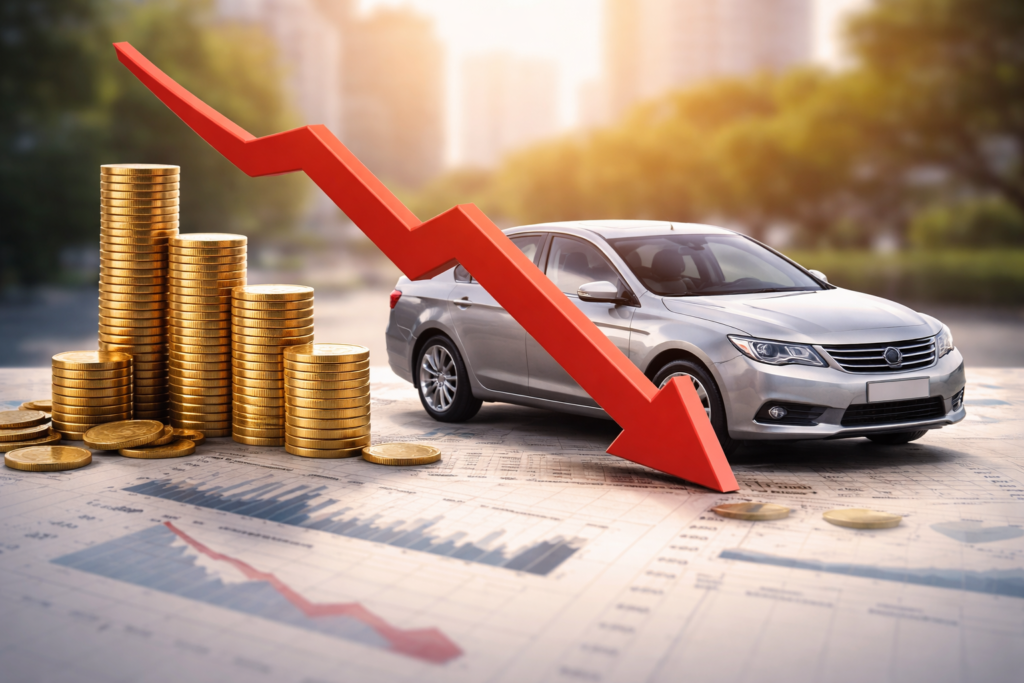
Car depreciation is the gradual decline in a vehicle’s value over time, and it begins the moment a car is driven out of the showroom. In simple words, vehicle depreciation explained means understanding why your car becomes worth less every year and how that affects your money. This beginner-friendly guide gives a direct and clear explanation of car depreciation, why it matters, how it works in real life, and how you can make smarter decisions as a car buyer or owner. Whether you are purchasing your first car or planning to sell one, knowing how depreciation works can save you a significant amount of money.
Meaning / Explanation of Car Depreciation
Car depreciation refers to the reduction in a vehicle’s market value as time passes. Unlike assets such as land or property, cars lose value because they are used regularly, experience wear and tear, and become outdated as new models enter the market.
To keep vehicle depreciation explained in the simplest way: every kilometer driven, every year added to a car’s age, and every new model launch makes older cars less desirable. Even a perfectly maintained vehicle will depreciate because technology, safety features, and fuel efficiency continuously improve.
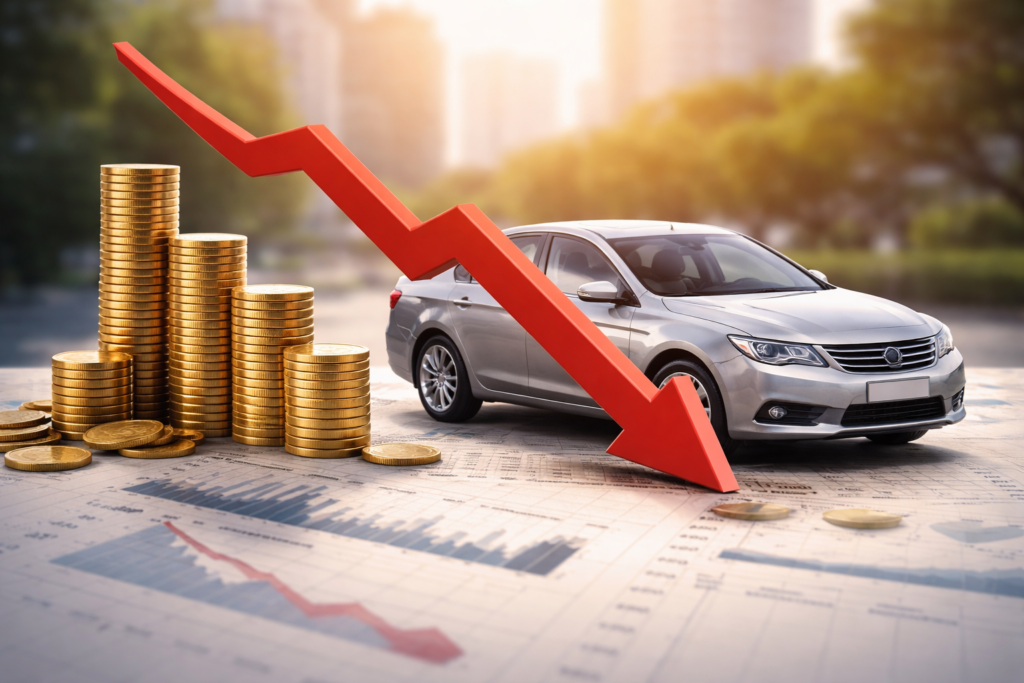
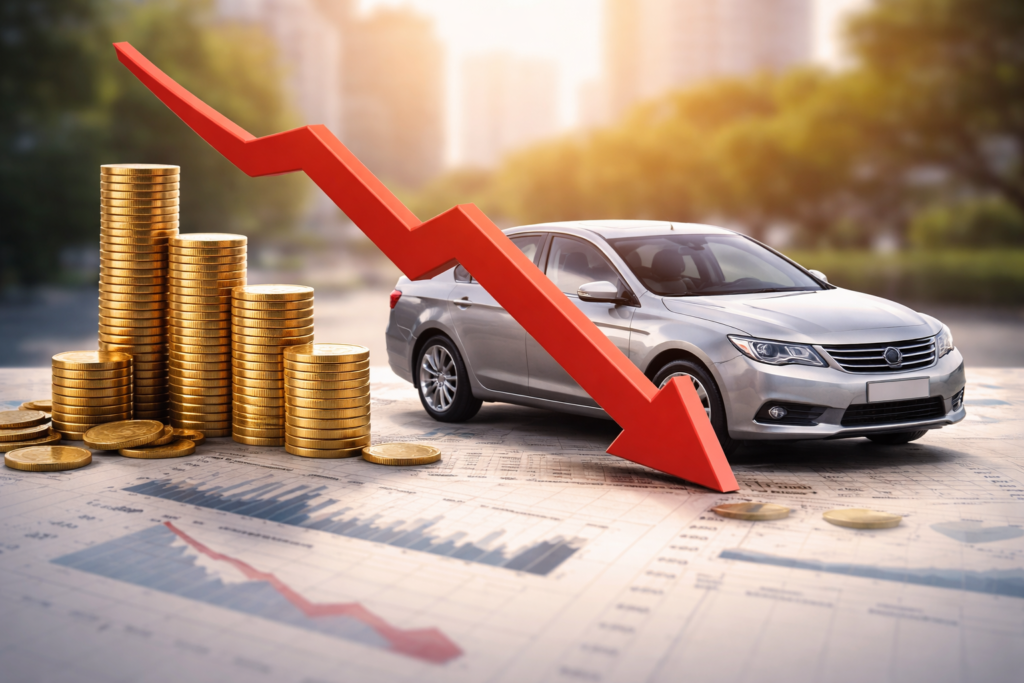
Depreciation follows a predictable pattern. The largest drop usually happens in the first year, often between 20% and 30%. After that, depreciation slows down but continues steadily. By the end of five years, many cars retain only 40% to 50% of their original value.
Several factors influence car depreciation:
- Brand reputation and resale value
- Vehicle segment (hatchback, sedan, SUV, luxury)
- Fuel type and engine reliability
- Mileage and driving conditions
- Maintenance and accident history
Understanding depreciation helps buyers look beyond the sticker price and think long-term.
Why Car Depreciation Matters
Car depreciation matters because it directly impacts your finances, even though many people ignore it while buying a car. The price you pay is only one part of the story; the value you lose over time is often much greater.
Depreciation affects:
- Resale or exchange value
- Loan settlement and remaining balance
- Insurance coverage and claim amounts
- Overall cost of ownership
For example, two cars may cost the same initially, but one may lose value much faster due to poor resale demand. Over a few years, this difference can result in a major financial loss.
Buyers who understand depreciation are better prepared to choose vehicles wisely. This is especially important when learning how to choose the right car for your budget, because affordability should include future resale value, not just monthly EMI.
In short, ignoring depreciation often leads to regret, while understanding it leads to smarter ownership.
How Car Depreciation Works (With Example)
Car depreciation works through a combination of time, usage, and market demand.
Let’s consider a simple example.
You purchase a new car for ₹10,00,000.
- After 1 year, the value may drop to ₹7,50,000
- After 3 years, it may be worth around ₹6,00,000
- After 5 years, it may fall to ₹4,50,000 or less
This loss happens regardless of how well the car performs. Even if the car is reliable and comfortable, buyers will compare it with newer models that offer better features and efficiency.
Depreciation accelerates due to:
- High mileage
- Poor maintenance
- Frequent repairs
- Market shifts toward electric or hybrid vehicles
This is why depreciation should be evaluated alongside insurance needs. Understanding concepts like coverage and valuation becomes easier when you also understand car insurance explained in simple terms, as insurance payouts often depend on the depreciated value of the vehicle.
Benefits of Understanding Car Depreciation
While depreciation itself is unavoidable, understanding it offers several advantages.
First, it helps you choose the right vehicle. Cars with strong resale value may cost more initially but save money later.
Second, it helps in negotiating price. Buyers who understand depreciation can negotiate better deals on both new and used cars.
Third, it supports smarter ownership planning. You can decide the best time to sell a car, usually before major depreciation hits after a certain age.
Fourth, it improves financial awareness. When combined with fuel, maintenance, and insurance, depreciation gives a complete picture of the car ownership cost, helping you avoid surprises.
Finally, it reduces emotional buying. Knowing depreciation prevents buyers from overspending on features that add little resale value.
Risks / Limitations of Car Depreciation
Despite understanding depreciation, there are limitations you cannot control.
Market conditions can change unexpectedly. Fuel price hikes, government regulations, or sudden popularity of electric vehicles can reduce resale value overnight.
Luxury cars often depreciate faster due to high maintenance costs and limited buyers in the used market.
Depreciation calculations are estimates, not guarantees. Actual resale value depends on buyer demand, condition, and timing.
Another limitation is emotional attachment. Many owners keep cars longer than financially optimal because of personal comfort or memories.
While depreciation awareness helps, it does not eliminate loss—it only helps manage it better.
Common Mistakes and Myths About Car Depreciation
One common myth is that only expensive cars depreciate heavily. In reality, all cars depreciate; the rate differs.
Another mistake is assuming low mileage alone ensures high resale value. Poor maintenance can offset low usage.
Many buyers believe modifications increase value. In most cases, aftermarket changes reduce resale appeal.
Some people think insurance covers depreciation fully. Most standard policies account for depreciated value unless special add-ons are chosen.
Another myth is that selling later always gives better value. Often, selling at the right time gives better returns than holding the car too long.
Avoiding these mistakes leads to more informed decisions.
Vehicle depreciation refers to the gradual reduction in a car’s value over time due to factors such as age, wear and tear, and changing market demand—a concept clearly explained by financial authority Investopedia in its detailed definition of depreciation. In the automotive industry, resale value plays a crucial role in depreciation, with experts at Kelley Blue Book emphasizing that brand reputation, reliability, mileage, and overall market trends heavily influence how much value a car retains over time. From an ownership-cost perspective, Consumer Reports consistently identifies depreciation as the largest expense of owning a vehicle, often exceeding fuel, maintenance, and insurance costs throughout the car’s lifetime.
Frequently Asked Questions (FAQ)
1. What is car depreciation in simple words?
Car depreciation is the loss of a car’s value over time due to aging, usage, and market changes.
2. When does car depreciation start?
It starts immediately after purchase, as soon as the car leaves the showroom.
3. Which cars depreciate the least?
Cars with strong brand reputation, reliability, and high demand usually depreciate slower.
4. Does maintenance reduce depreciation?
Good maintenance does not stop depreciation but helps retain higher resale value.
5. How does depreciation affect insurance?
Insurance payouts are based on the depreciated value unless special coverage is chosen.
6. Is buying a used car better because of depreciation?
Yes, used cars often offer better value because the biggest depreciation hit is already absorbed by the first owner.
7. Can I calculate depreciation accurately?
You can estimate it, but actual resale value depends on market demand and condition.
8. Do electric cars depreciate faster?
Currently, some electric cars depreciate faster due to evolving technology, but this trend may change.
9. How much does a car depreciate every year on average?
On average, a car depreciates by about 15% to 20% per year, with the highest drop occurring in the first year after purchase.
10. Does car color affect depreciation?
Yes, neutral colors like white, silver, and grey usually depreciate slower, while uncommon or flashy colors may reduce resale value.
11. Can depreciation be reduced with zero-depreciation insurance?
Zero-depreciation insurance does not reduce market depreciation but helps you receive higher claim payouts by covering parts without depreciation deduction.
12. Do automatic cars depreciate faster than manual cars?
This depends on market demand. In many cities, automatic cars hold value better due to increasing preference for convenience.
13. Is it better to sell a car before or after five years?
Selling a car before major age milestones (around 4–5 years) often gives better resale value, as depreciation accelerates afterward.
Conclusion
Car depreciation is an unavoidable part of vehicle ownership, but it does not have to be a financial burden. By understanding vehicle depreciation explained in simple terms, buyers can make smarter choices, plan ownership better, and reduce long-term losses. Depreciation should be viewed as a cost just like fuel, insurance, and maintenance. When considered together, these factors give a realistic picture of what owning a car truly costs. Smart buyers accept depreciation, plan for it, and use it to their advantage rather than being surprised by it later.
Disclaimer
This article is intended for informational and educational purposes only. The information provided does not constitute financial, legal, or automotive advice. Vehicle depreciation rates may vary based on market conditions, location, vehicle condition, and individual usage patterns. Readers are advised to conduct their own research or consult qualified professionals before making purchasing or financial decisions related to vehicles.
Pingback: Hatchback vs Compact SUV: Ultimate Small SUV 2026 Comparison Guide