
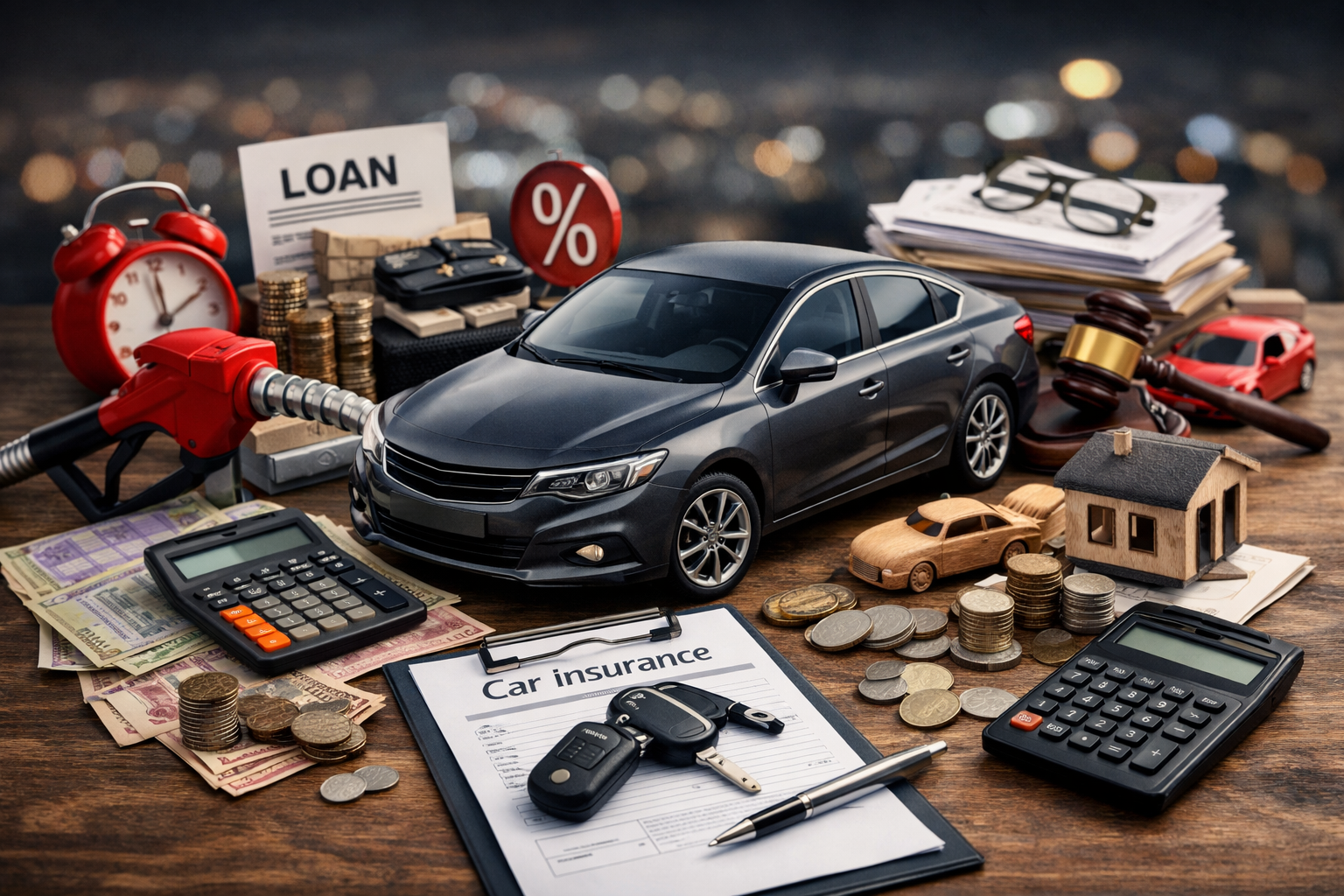
The hidden costs of buying a car often take car buyers by surprise. Whether you’re a first-time buyer or looking to upgrade, it’s easy to get drawn in by the ex-showroom price or flashy discounts. But the truth is, owning a car in India involves several ongoing expenses that go far beyond the sticker price. These hidden costs can turn even an affordable car into a costly long-term commitment if not planned carefully.
Understanding every expense that comes with car ownership—including taxes, registration, insurance, financing, fuel, maintenance, and depreciation—helps you make a financially smart decision and avoid buyer’s remorse later.
Meaning / Explanation: What Are the Hidden Costs of Buying a Car?
In simple terms, hidden costs refer to the expenses that aren’t visible in the advertised or ex-showroom price of a car. Dealers and manufacturers usually promote only the base price, while the actual “on-road price” includes several add-ons and government levies.
For instance, if a car is advertised for ₹8 lakh, you may eventually spend anywhere between ₹10–11 lakh after adding registration, road tax, insurance, extended warranty, fuel, maintenance, and loan interest. These expenses appear at various stages—before the purchase, during regular ownership, and even at the time of resale.
The hidden costs can be divided into major categories:
- One-time costs: Registration charges, road tax, and insurance premiums.
- Recurring costs: Fuel, servicing, cleaning, and periodic maintenance.
- Financial costs: Loan interest, processing fees, and prepayment charges.
- Long-term costs: Depreciation, resale loss, and potential repair expenses.
A clear understanding of these categories ensures that you select a car that matches not just your buying power, but your long-term financial comfort.
Why It Matters: Why You Must Consider Hidden Car Buying Costs
Buying a car is not just a one-time purchase—it’s an ongoing financial commitment. Many people stretch their budgets for a higher model or trim, thinking they can “manage later.” Unfortunately, this mindset can lead to financial stress as the real costs start piling up.
Ignoring hidden expenses can result in:
- Overextending your budget and taking unnecessary loans.
- Difficulty managing monthly EMIs along with fuel and maintenance costs.
- Falling into a debt trap due to poor planning.
- Regret due to unexpected ownership expenses.
Remember, a car is a depreciating asset—its value drops every year while costs of ownership remain steady or even rise. For example, a petrol sedan that costs ₹9 lakh today might be worth only ₹5.5 lakh in three years while demanding regular servicing and insurance renewals.
If you’re financing your purchase, use a reliable car loan EMI calculator to estimate monthly payments. But remember, EMI is only one piece of the cost equation.
How It Works / Example: Real-Life Breakdown of Hidden Car Costs
Let’s look at how hidden costs affect the total spending on a mid-range vehicle in India.
Example Scenario
Suppose you’re buying a car with an ex-showroom price of ₹9,00,000. Here’s an approximate cost breakdown over five years:
- Road Tax & Registration: ₹1,10,000 (varies by state)
- Insurance (First Year): ₹35,000
- Handling & Accessories: ₹20,000
- Loan Interest (Over 5 Years): ₹1,80,000
- Fuel (Yearly Avg @ ₹70,000): ₹3,50,000 (5 years)
- Maintenance & Servicing: ₹15,000/year = ₹75,000 (5 years)
That brings your total ownership cost to nearly ₹14.7 lakh. And that doesn’t include depreciation—potentially a loss of ₹3–4 lakh more if you decide to sell after five years.
Hidden Cost Snapshot
| Expense Type | Estimated Cost | Remarks |
|---|---|---|
| Registration & Tax | ₹1,10,000 | Mandatory; varies by state and car segment |
| Insurance | ₹35,000–₹45,000 | Comprehensive + third-party coverage required |
| Financing | ₹1,80,000 | Approx. interest for a 5-year loan |
| Fuel (5 years) | ₹3,50,000 | Assuming 12–15 km/l mileage, ₹100/l fuel cost |
| Maintenance | ₹75,000 | Average regular servicing and parts |
| Total (5 Years) | ~₹14,50,000 | Excludes depreciation loss |
This helps you clearly see how a “₹9 lakh car” can cost up to ₹14–15 lakh to own over five years, making transparency about total cost essential before making a purchase.
Extended Breakdown: Key Hidden Costs Explained
1. Registration and Road Tax
This is a one-time cost charged by your Regional Transport Office (RTO). Depending on the car’s ex-showroom price, fuel type, and engine capacity, registration may cost anywhere between 8% and 15% of the vehicle’s value. States like Karnataka and Maharashtra generally have higher road taxes compared to others like Delhi or Tamil Nadu.
2. Car Insurance
Insurance is mandatory, and for new cars, dealers often bundle the first year’s premium. However, comprehensive insurance with add-ons (like zero depreciation or engine cover) can raise the price. In subsequent years, the premium decreases slightly, but rising claim ratios and inflation can offset these reductions.
3. Fuel and Mileage
Fuel is one of the highest recurring expenses. While diesel used to be cheaper, the price gap has narrowed. EVs reduce fueling costs significantly, but electricity rates and charging setup expenses still count. Carefully consider your daily commute; for high-mileage users, fuel efficiency becomes a critical factor.
4. Maintenance and Servicing
Regular maintenance includes oil changes, brake cleaning, tyre alignment, and general checkups. Premium brands and imported models often have higher service charges. Skipping maintenance may reduce short-term costs but leads to expensive repairs later.
5. Depreciation
Depreciation is the invisible cost that silently reduces your car’s value. On average, a car loses 15–20% of its value in the first year and up to 50% within 3–5 years. Choosing popular models and colours can help retain better resale value.
6. Loan Interest and Financing Charges
Banks charge interest based on your credit score, loan amount, and tenure. A 5-year loan on ₹8 lakh at 9% interest can cost around ₹1.8 lakh in interest alone. Always compare loan options, down payment percentages, and consider early repayment options to minimize costs.
7. Accessories and Add-ons
Dealers often push accessories like seat covers, floor mats, music systems, or anti-rust coating. Some are useful, others purely cosmetic. Always evaluate if you really need each extra before signing the deal.
8. Extended Warranty and AMCs
Extended warranties or annual maintenance contracts (AMCs) can act as safety nets, especially for high-end cars. However, they add 2–4% extra to your purchase cost, so choose wisely based on your expected usage.
Benefits: Why Understanding Hidden Costs Works in Your Favor
Knowing all the hidden costs turns you into a strategic buyer rather than an impulsive one. You can negotiate better, plan finances accurately, and enjoy stress-free ownership.
- Strengthens your negotiation power with dealers.
- Prevents impulse buying of unnecessary variants or accessories.
- Enables accurate budget forecasting.
- Encourages better selection between petrol, diesel, or EV options.
- Improves resale value through well-maintained ownership history.
Savvy buyers who analyze long-term costs often enjoy greater satisfaction and less financial strain. Comparing ownership costs between traditional vehicles and EVs can also reveal surprising insights. You can check out the detailed analysis in Are Electric Cars Worth It in 2026?.
Risks / Limitations: Financial Pitfalls to Be Aware Of
Car ownership comes with unavoidable risks. Fuel prices, insurance premiums, and spare part costs tend to rise over time. Stay prepared for unexpected expenses like tyre replacement, battery failure, or accident repairs.
- Fluctuating fuel prices increase monthly costs.
- Rapid depreciation reduces your resale potential.
- Premium car brands charge steep service rates.
- Loan defaults may damage credit scores.
- New models can make old ones obsolete faster.
Be especially cautious when buying luxury or technology-heavy cars. High-end features often require specialized repair, which can cost thousands more than regular maintenance.
Common Myths and Mistakes About Car Buying Costs
Car buyers often fall into predictable traps, mainly due to marketing pressures or misconceptions.
- Myth: “If I can afford the EMI, I can afford the car.”
- Reality: EMIs exclude fuel, maintenance, and depreciation expenses.
- Mistake: Ignoring long-term service and insurance costs.
- Myth: “Insurance stays the same every year.”
- Reality: Premiums vary depending on claims, coverage, and car age.
- Mistake: Falling for “free accessories” that inflate the final price.
- Myth: “Resale value will cover future losses.”
- Reality: Not all cars hold value well; it depends on brand demand and condition.
To avoid these mistakes, use ownership cost comparison tools, read expert reviews, and focus on long-term affordability rather than upfront discounts.
FAQ Section: Hidden Costs of Buying a Car
According to Wikipedia’s explanation of depreciation, vehicles lose value over time, making ownership costs higher than the purchase price.
1. What is the biggest hidden cost of owning a car?
Depreciation is typically the largest hidden cost, often reducing your car’s value by 40–50% within five years.
2. Are used cars cheaper in the long run?
Yes, because the first owner absorbs the steepest depreciation. However, always verify service records and mechanical condition.
3. How much should I budget beyond the car price?
Set aside at least 20–30% extra beyond the ex-showroom price to cover on-road expenses and ongoing costs.
4. Does insurance cost reduce over time?
Usually yes, but factors like your claim history, add-ons, and regulatory changes can affect premiums.
5. Are electric cars cheaper to maintain?
Generally yes, but consider the cost of battery replacement and charging infrastructure before deciding.
6. Should I buy an extended warranty?
It’s smart for long-term ownership or if the car has advanced electronics that may be costly to repair later.
7. Is fuel efficiency really that important?
Absolutely. Fuel often accounts for the highest recurring expense, especially for city drivers.
8. Can accessories increase hidden costs?
Yes, unnecessary extras like flashy lighting or fancy infotainment systems can inflate total spending.
9. How can I estimate total ownership cost?
Combine your EMI, fuel, insurance, maintenance, and depreciation estimates over your expected ownership period.
10. Is buying on loan always bad?
No. Loans can be helpful if managed wisely, but aim for a bigger down payment to reduce total interest.
Expert Tips to Reduce Hidden Car Costs
- Choose cars with proven reliability and lower service costs.
- Regularly service your car to prevent expensive breakdowns.
- Track fuel economy and drive efficiently to save fuel.
- Compare multiple insurance plans online every renewal cycle.
- Opt for smaller engines or hybrid vehicles if your driving is mostly city-based.
- Sell your car before it crosses major depreciation milestones (like 7 years).
Conclusion
The hidden costs of buying a car go far beyond its showroom appeal. From registration and taxes to fuel, maintenance, and depreciation, each element affects your long-term financial well-being. By calculating the complete ownership cost before purchase, you can enjoy your car without financial strain or unpleasant surprises.
A well-informed buyer always compares all aspects—initial cost, upkeep, running expenses, and resale potential. Whether it’s your first car or an upgrade, a realistic understanding of these hidden costs ensures stress-free ownership and smarter financial planning.
Disclaimer: This article is published for informational and educational purposes only. All cost examples, estimates, and figures related to car prices, registration charges, insurance, fuel, maintenance, loan interest, and depreciation are indicative and may vary based on location, time, vehicle model, driving habits, and government regulations. This content should not be considered financial, legal, or investment advice. Readers are advised to independently verify all details and consult certified financial advisors, authorized dealers, or relevant professionals before making any car purchase or financing decisions.